
Last updated August 25, 2026
Free on-site gate assessment - hinges, posts, and your LiftMaster or Nice gate operator checked before anything is quoted
The assessment is free and the quote is the invoice.
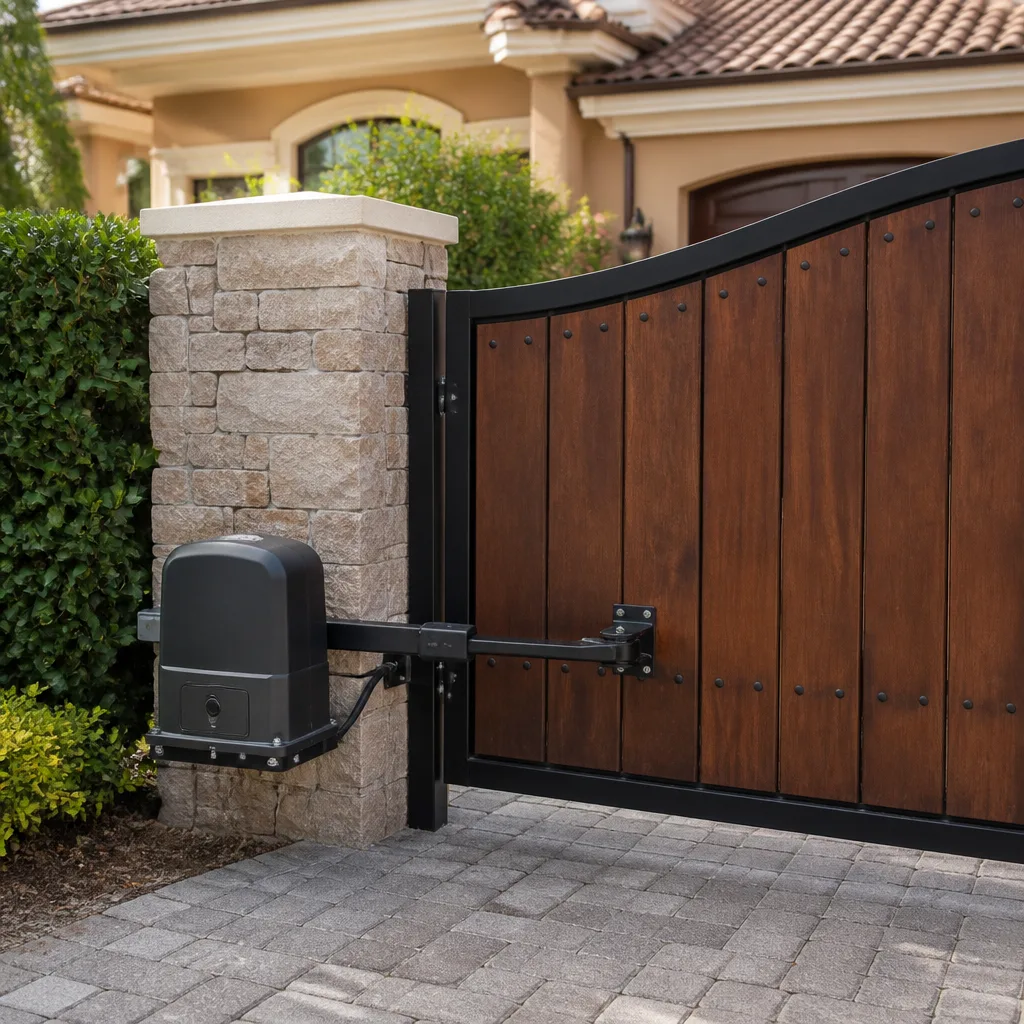
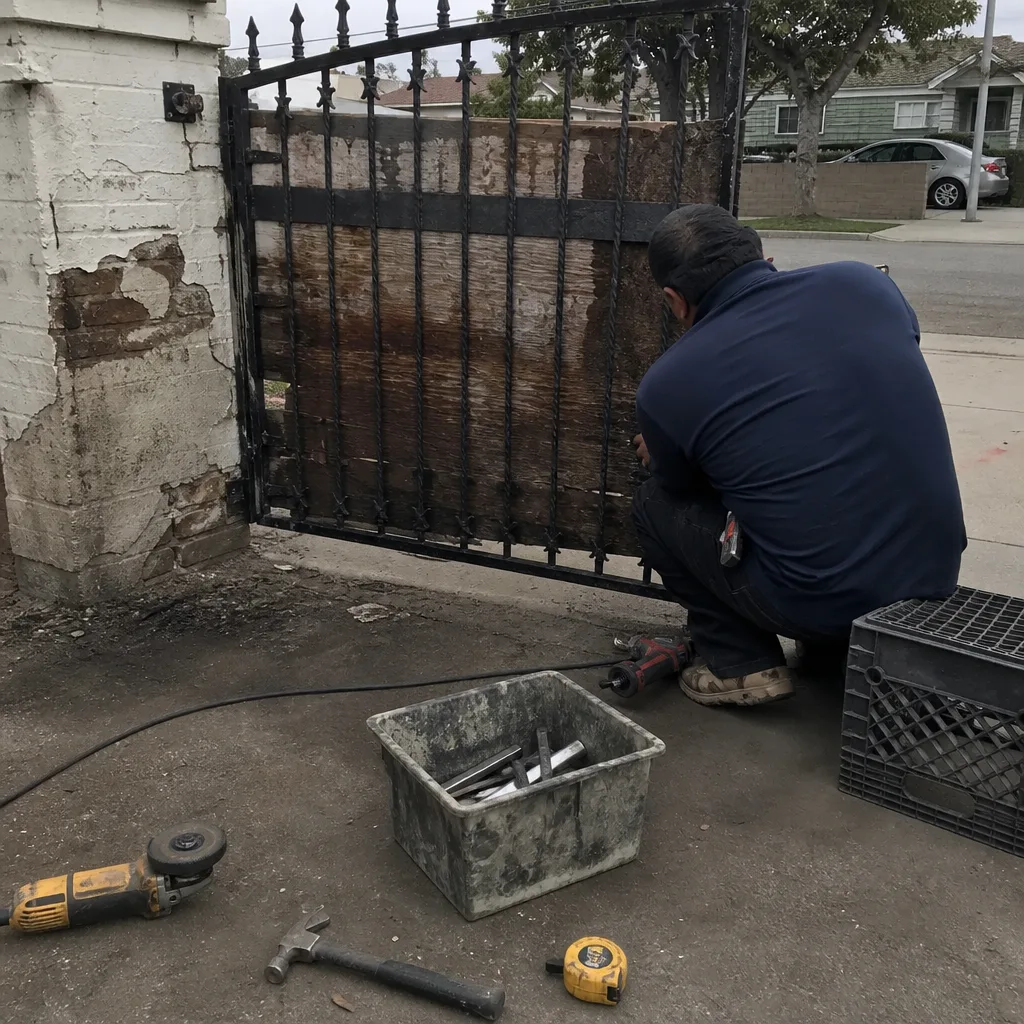 Before
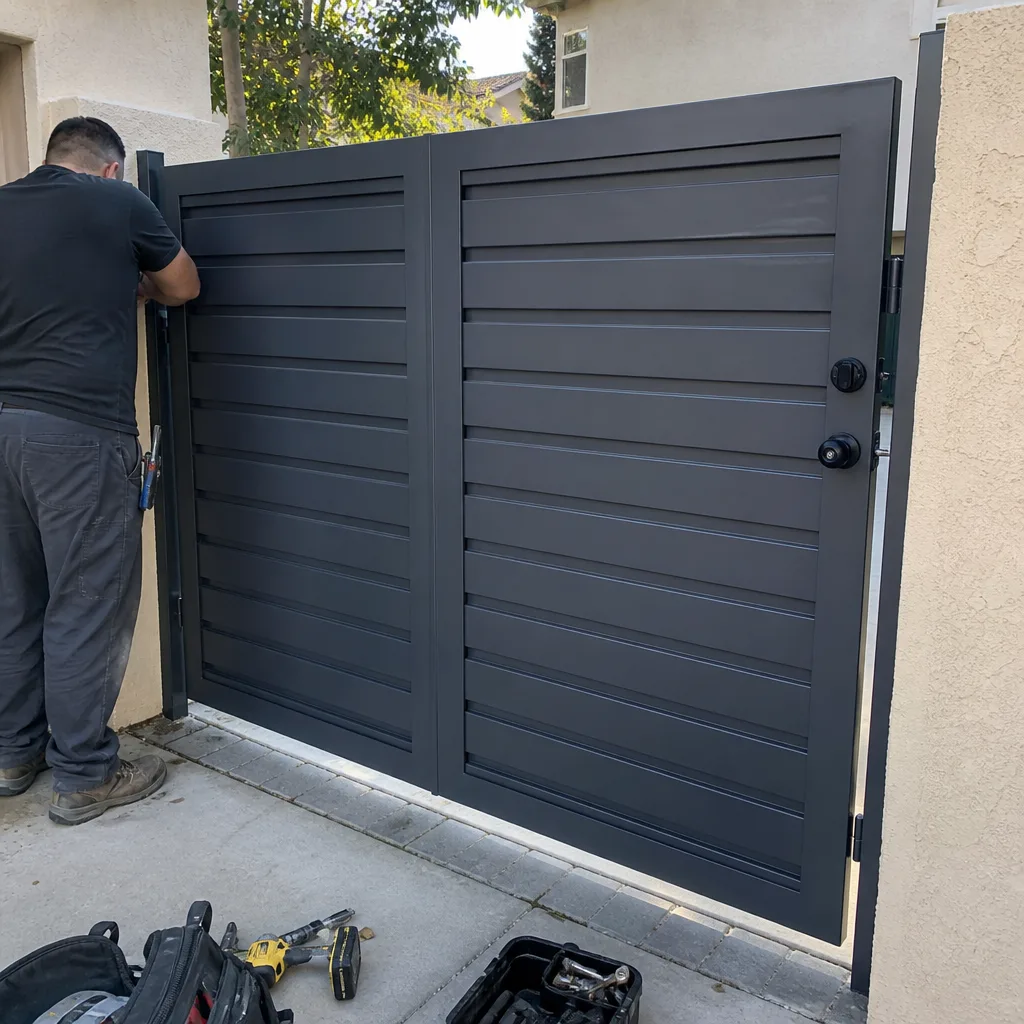 After
After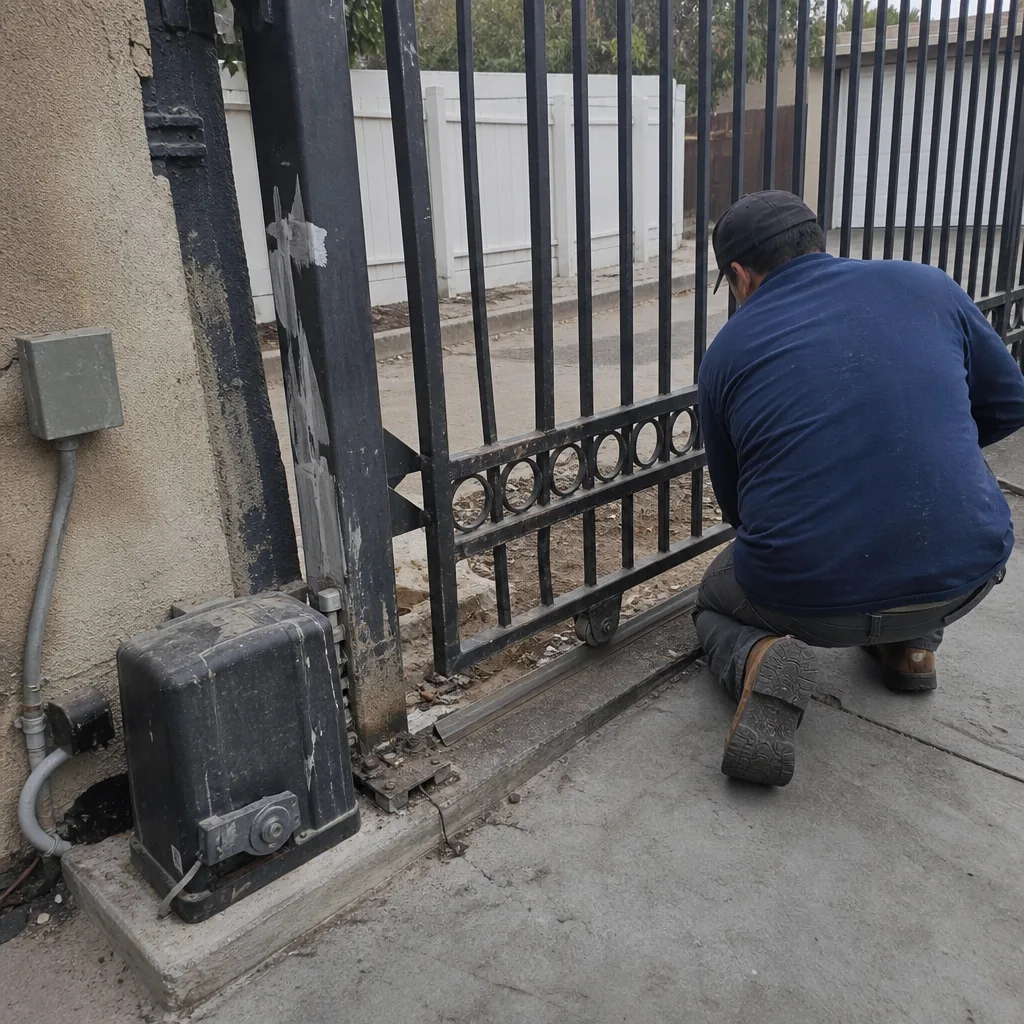 Before
 After
After Before
 After
AfterGate Repair Permits, Codes & Inspections in CA: What You Need to Know
Most California homeowners assume a gate repair is a simple swap of a hinge or a motor. Then the city inspector drives by, or the HOA sends a letter, and a $400 repair turns into a $4,000 compliance headache. The truth is that California has some of the strictest gate and barrier codes in the country, and many of them apply not just to new gates but to repairs on existing ones. This guide covers what North Hollywood and greater Los Angeles homeowners actually face: permit triggers, the state fire code, vehicular gate safety standards, and when an inspection is required. You’ll learn what’s enforced, what’s overlooked, and how to stay on the right side of both.
Quick Answer
Most gate repairs in California do not require a building permit when you’re replacing like-for-like parts: a hinge, a wheel, a keypad, a circuit board, or an opener of the same type and voltage. Permits and inspections typically become mandatory when you alter the gate’s structure, change its height or footprint, replace a pedestrian gate with a vehicular gate, add or relocate automation, or install a new gate on a property that never had one. The two codes that matter most are the California Building Code for structural work and the California Fire Code, which mandates specific safety features on automated vehicular gates, including UL 325-compliant entrapment protection.
Table of Contents
- Do You Need a Permit for Gate Repair in California?
- When a “Repair” Becomes a Permitted Job
- California Fire Code and Automated Gate Safety
- UL 325 and Entrapment Protection: What the Law Requires
- North Hollywood and L.A. City Specifics: What Inspectors Look For
- HOA Rules, Setbacks, and Pedestrian Easements
- The Permit and Inspection Process, Step by Step
- What Permits and Inspections Cost in the North Hollywood Area
Do You Need a Permit for Gate Repair in California?
Here is the straight answer from our experience working gates across North Hollywood, Studio City, and the wider San Fernando Valley: the vast majority of gate repairs are treated as maintenance, not construction. The City of Los Angeles Department of Building and Safety (LADBS), which governs North Hollywood, does not require a permit to replace worn or failed components on an existing gate when the work does not change the gate’s size, height, location, or method of operation.
What does that cover in practice?
- Replacing a bent hinge or a rusted weld on a driveway gate
- Swapping a failed gate opener for a new unit of the same voltage and style
- Replacing a keypad, photo eye, loop detector, or receiver
- Repairing or replacing a gate wheel or track
- Welding a cracked frame member back to its original position
- Replacing a broken pedestrian gate latch or closer
We’ve rebuilt gates in the Valley where the repair list was long enough to fill a page, and no permit was needed because the gate itself stayed in place and unchanged in function. The operative word is unchanged. The moment the work alters what the gate is, where it sits, or how it operates, the situation changes.
When a “Repair” Becomes a Permitted Job
This is the section that saves people from fines. In California, and specifically under LADBS rules that apply to North Hollywood, the following trigger a permit and, in most cases, an inspection:
- Any change to gate height or width. If you extend a 6-foot gate to 7 feet, or widen a single 12-foot driveway opening to a 16-foot double, that is a structural alteration. Permits required.
- Installing a gate where none existed. Putting in a new driveway gate, courtyard gate, or side-yard gate on a property that never had one is new construction. Permits required.
- Changing from a manual gate to an automated gate. Adding a motor and opener system to a previously manual gate brings the entire assembly under California Fire Code and UL 325 regulations. Permits required.
- Replacing a pedestrian gate with a vehicular gate. This changes the egress profile of the property, and fire officials care about this. Permits required.
- Moving the gate posts or changing the gate’s hinge location. This is structural work on the mounting system, not a component swap. Permits required.
- Adding or relocating a gate operator, pedestal, or access control mast. New electrical and new anchoring typically require a permit and potentially a separate electrical permit.
A good rule of thumb, and one we repeat often in North Hollywood: if a job description includes the word “new,” “relocate,” “raise,” “widen,” or “convert,” assume you need to talk to LADBS first. It costs nothing to call and ask, and the alternative is discovering the issue when a neighbor reports the work or when you go to sell the house and the unpermitted alteration shows up in a disclosure.
California Fire Code and Automated Gate Safety
California was one of the states that moved hardest after a wave of gate-related child deaths in the 1990s and early 2000s. The result is that the California Fire Code, which incorporates the national standards, treats automated vehicular gates not as decorative amenities but as regulated safety equipment. If your gate has a motor on it, the State of California has an opinion about how that motor must behave.
The most important requirement is entrapment protection. Every automated vehicular gate must be equipped with a minimum of two independent safety devices, one of which must be a primary entrapment protection device. In plain terms:
- Primary devices are inherent to the operator. A motor with an obstruction sensor that reverses the gate when it hits resistance, like an automatic reverse mechanism in a garage door opener.
- Secondary devices are external. Photo eyes or light beams across the gate opening, edge sensors on the gate’s leading edge, or loop detectors that sense a vehicle or object in the gate’s path.
In our experience, most gates in the North Hollywood area that are more than 15 or 20 years old fail this standard. They were installed before the current code took full effect, and nobody has upgraded them. The gate still works fine, right up until it doesn’t, and the failure mode of a gate without entrapment protection is unforgiving. This is one area where we don’t compromise and don’t soften the message: if you have an automated gate with no photo eye and no reversing mechanism, it is not code compliant, full stop.
UL 325 and Entrapment Protection: What the Law Requires
UL 325 is the Underwriters Laboratories standard that governs gate and door operators. California Fire Code references it directly, which means it is enforceable law, not an industry suggestion. The standard sets specific requirements for force limits, speed limits, and monitoring of external devices.
Here is what the current standard, and by extension California law, requires of every automated vehicular gate:
- Type A entrapment protection is inherent to the operator and must stop and reverse the gate when it encounters an obstruction within two seconds of contact.
- Type B1 or B2 protection is a non-contact sensor. A photo eye that monitors the gate’s travel path and stops or reverses the gate if the beam is interrupted.
- Contact sensors, like a pressure-sensitive edge strip, are required if the gate’s leading edge can trap a person against a fixed object such as a post or wall. This is common when gate designs have minimal clearance between the gate leaf and the support post.
- The gate operator must be tested and listed by a recognized testing laboratory. Most major brands sold in the U.S. carry this listing, but knockoff or gray-market operators sometimes do not.
We service nine automation brands, including Viking, Ghost Controls, and DoorKing, and all of the current-production operators from those companies are UL 325 listed. When we replace an opener in North Hollywood, we verify the listing and install the entrapment protection devices required for the specific gate configuration. That is not an upsell. It’s the law, and it’s the only way we’ll leave a gate.
North Hollywood and L.A. City Specifics: What Inspectors Look For
North Hollywood is part of the City of Los Angeles, which means LADBS is the building authority and the Los Angeles Fire Department (LAFD) enforces the fire code. Every city in the Valley does things a little differently. Burbank has its own building department. Glendale has its own quirks on gate height. But within North Hollywood proper, here is what we see LADBS and LAFD actually enforce.
Gate height. L.A. City zoning limits most residential driveway gates in R1 and R2 zones to 6 feet. If you have a 7-foot gate on a single-family lot and an inspector has reason to look, that gate is nonconforming. Gates in front of the front property line can face additional restrictions.
Setback compliance. A common problem in older North Hollywood neighborhoods, especially in the streets character district and the post-war bungalow blocks, is a driveway gate installed too close to the street. L.A. requires a minimum setback on a driveway gate so a vehicle can pull completely off the public right-of-way before the gate closes behind it. Otherwise, a car waiting for a gate to open is parked in the street, and the city considers that a traffic hazard. The specific distance varies by street classification, but it is routinely 10 to 20 feet. We’ve measured many North Hollywood driveways where the existing gate is closer than that and has been for forty years. That’s grandfathered until it isn’t: a major repair that triggers a permit can trigger a setback compliance review at the same time.
Pedestrian access. If a property’s only front entrance is through a vehicle gate, LAFD wants a separate pedestrian gate, or the main gate needs a manual release accessible from outside. Firefighters must be able to reach the front door.
Electrical work. Any new 120V run to a gate operator requires an electrical permit and an LADBS electrical inspection. A licensed electrician or a licensed contractor with the right classification does the work. Low-voltage systems (24V transformer to a battery) are far simpler and often avoid a full electrical permit.
HOA Rules, Setbacks, and Pedestrian Easements
Hillside neighborhoods and gated communities around North Hollywood, including parts of Toluca Lake, Valley Village, and the Cahuenga Pass corridor, often layer HOA rules on top of city code. An HOA’s architectural committee can refuse a gate design the city would approve, and can also demand a gate design the city would not care about. This is separate from, and additional to, the permitting process.
The most frequent conflicts we see:
- HOA requires black ornamental iron; city only cares about height and setback. Both must be satisfied.
- HOA requires a specific opener brand or an underground operator for aesthetics. That is binding on the homeowner regardless of what the city allows.
- Easements run along the side yard in many Valley tracts. If a utility easement crosses where a gate post is planned, the utility company holds a say. Digging for gate posts in a marked easement without utility clearance can be costly and dangerous.
- Shared driveways, common in older North Hollywood subdivisions, create a legal thicket. The gate belongs to one owner but serves two homes. In that case the gate is typically a shared responsibility, and any permit application should name both property owners.
We tell every North Hollywood homeowner the same thing when an HOA is in the picture: get the architectural approval in writing before we start a permitted job. We’ll help prepare the submittal package, but the written approval belongs to the homeowner. It prevents the single most avoidable dispute we see: a completed gate job, a neighbor complaint, and an HOA demanding changes the city never asked for.
The Permit and Inspection Process, Step by Step
When a job does require a permit, here is how the process typically runs for a North Hollywood homeowner under LADBS. This is the same flow whether it’s a gate addition, a height change, or an automation conversion.
- Determine the permit type. Most residential gate work falls under a building permit. New 120V electrical runs add an electrical permit. Some automation-only retrofits can be handled with an electrical permit alone if the gate structure is untouched.
- Prepare the submittal. LADBS wants a site plan showing the gate’s location and setback from property lines, the gate height and width, and a description of the opener and safety devices. For standard residential gates, an express permit may apply, which is faster and carries a lower fee.
- Submit through LADBS online or in person. Many standard gate permits in L.A. City are issued over the counter or within a few business days through the online portal. Nonstandard designs, hillside conditions, or gates in front of the front property line may require plan check, which adds time.
- Perform the work. The gate is built and installed per the approved plan. Any deviation from the plan at this stage gets flagged at inspection.
- Schedule the inspection. LADBS inspects structural work: post footings before concrete pour, gate frame after welding, and the completed installation. LAFD inspects automated gates for entrapment protection compliance.
- Receive sign-off. Once both inspections pass, the permit is closed and the work is legal. This matters at sale, at insurance renewal, and at the next repair.
The whole process for a standard residential gate is typically two to six weeks, mostly spent waiting on plan check and inspection scheduling. The on-site inspection itself is usually under an hour.
What Permits and Inspections Cost in the North Hollywood Area
Permit fees in L.A. City are based on valuation and permit type, and they are more reasonable than most homeowners expect. Here are the realistic ranges for residential gate work in the North Hollywood area as of current fee schedules:
- Express permit for a standard residential gate: $250 to $600, depending on the valuation of the work.
- Standard building permit with plan check: $800 to $1,800 for a typical driveway gate, including plan check fees and inspection fees.
- Electrical permit for a new gate operator circuit: $150 to $400, assuming a standard 120V branch run under 50 feet.
- LAFD inspection fee: Generally bundled into the building permit or billed separately at $100 to $300 depending on the scope.
- Expedited service fees: LADBS offers expedited plan check at a premium, usually double the standard plan check fee.
These are the city’s fees. They do not include the contractor’s labor, the gate materials, the operator, or the safety devices. A homeowner in North Hollywood who hears “permit” and assumes it means thousands of dollars is usually surprised. The permit itself is rarely the expensive part. The safety upgrades the inspector may require, such as adding photo eyes to an old gate or replacing a non-listed opener, are typically a bigger line item. We quote every job with the permit costs broken out separately and the price settled before work begins, so there is no surprise when the paperwork arrives.
Common Mistakes to Avoid
- Assuming every gate repair needs a permit. Most like-for-like repairs don’t. Calling LADBS first is free, and over-permitting adds cost and delay for no benefit. A reputable contractor will tell you when a permit isn’t needed.
- Assuming no repair ever needs a permit. Conversely, welding a new steel frame and converting a manual gate to automation without a permit is a liability that surfaces at the worst possible time, usually during escrow.
- Ignoring entrapment protection on an automated gate. Whether or not the city inspects, the legal exposure is yours. An automated gate without a reversing mechanism and a photo eye is a serious injury waiting to happen.
- Installing a gate taller than 6 feet in an R1 zone. This is one of the most common code violations in North Hollywood. Property owners see a tall gate as security; LADBS sees a zoning violation.
- Skipping the HOA approval in a managed community. The HOA can force removal at the homeowner’s expense even when the city has already signed off. Get both approvals in writing, in that order.
- Digging for gate posts without utility clearance. Underground gas, electric, and telecom lines run through Valley neighborhoods. A call to 811 before digging is free and mandatory. A gas line strike is neither.
- Hiring a contractor who won’t name the permit status. If the answer to “is this permitted?” is vague, that’s the answer. Ask for the permit number, or ask for a written explanation of why none is required. A straight answer should come in one sentence.
When to Call a Professional
Any time a gate repair moves beyond the level of cleaning and lubricating, a professional makes sense. Welding on a steel frame is not a weekend project, and the high-tension springs on many older gate designs carry enough stored energy to seriously injure someone who doesn’t understand how to release them safely. Work on any automated gate carries electrical risk, both line voltage at the operator and stored energy in the battery backup. When the job involves a permit, a contractor who has done that dance with LADBS a hundred times knows the submittal, the inspection, and the corrections, and can keep the project moving. Ironworks Gate Co. offers free estimates in North Hollywood - call (925) 693-7978 to have the situation assessed. We’ll tell you plainly whether the job needs a permit and what it will cost if it does. Everything quoted is agreed before any work starts, and every job carries the 90-Day Done Right Promise in writing.
Frequently Asked Questions
No permit is required for like-for-like repairs on an existing gate: replacing a hinge, wheel, opener of the same type and voltage, keypad, circuit board, or welded frame crack. A permit becomes necessary when the gate’s height, width, location, or method of operation changes, or when a new gate is installed where none existed. When in doubt, call LADBS or ask your contractor for the permit status in writing.
Every automated vehicular gate in California must have at least two independent entrapment protection devices. One must be inherent to the operator, typically an obstruction-sensing reverse mechanism. The second must be external, most often a photo eye across the gate opening or a contact-sensing edge strip. These requirements come from UL 325, which is incorporated into the California Fire Code by reference.
A standard residential gate permit in L.A. City typically runs $250 to $600 for an express permit and $800 to $1,800 for a standard building permit with plan check. An electrical permit for a new gate operator circuit adds $150 to $400. Call (925) 693-7978 for an exact quote on your specific gate project - estimates are free, and permit costs are always itemized separately.
In most L.A. City R1 and R2 residential zones, a driveway gate taller than 6 feet is a zoning violation unless a variance is obtained. Variances are granted case by case and typically require justification such as unusual site conditions. Many taller gates in older North Hollywood neighborhoods predate current enforcement and are nonconforming rather than legal.
Yes. An HOA’s architectural committee controls gate design, materials, and even opener specifications within its jurisdiction, entirely separate from LADBS. An HOA can restrict a design the city would approve and can require a brand or style the city doesn’t care about. Written HOA approval should precede any permitted gate work in a managed community.
Unpermitted work must be disclosed during escrow, and it frequently becomes a negotiation point or a deal-breaker. The buyer’s lender may require the seller to obtain retroactive permits or remove the gate. In practice, North Hollywood sellers often pay far more to correct the situation at sale than the original permit would have cost. Call (925) 693-7978 to have an existing gate evaluated before it becomes a title issue.
The Bottom Line
Most gate repairs in California don’t need a permit, and the ones that do aren’t as expensive or as slow as the horror stories suggest. What matters is knowing which situation you’re in. Like-for-like repairs are maintenance. Structural changes, new installations, and automation conversions are construction, and they come with code requirements that exist for a reason: entrapment protection saves lives. In North Hollywood, LADBS and LAFD enforce a clear set of rules around height, setback, pedestrian access, and operator safety. A homeowner who learns those rules before the gate goes up is ahead of 90 percent of their neighbors. The rest is just iron and electricity, and that part we’ve been handling at Ironworks Gate Co. for over 42 years.
Written by Victor Salinas, Owner at Ironworks Gate Co., serving North Hollywood since 2013.