
Last updated August 25, 2026
Free on-site gate assessment - hinges, posts, and your LiftMaster or Nice gate operator checked before anything is quoted
The assessment is free and the quote is the invoice.
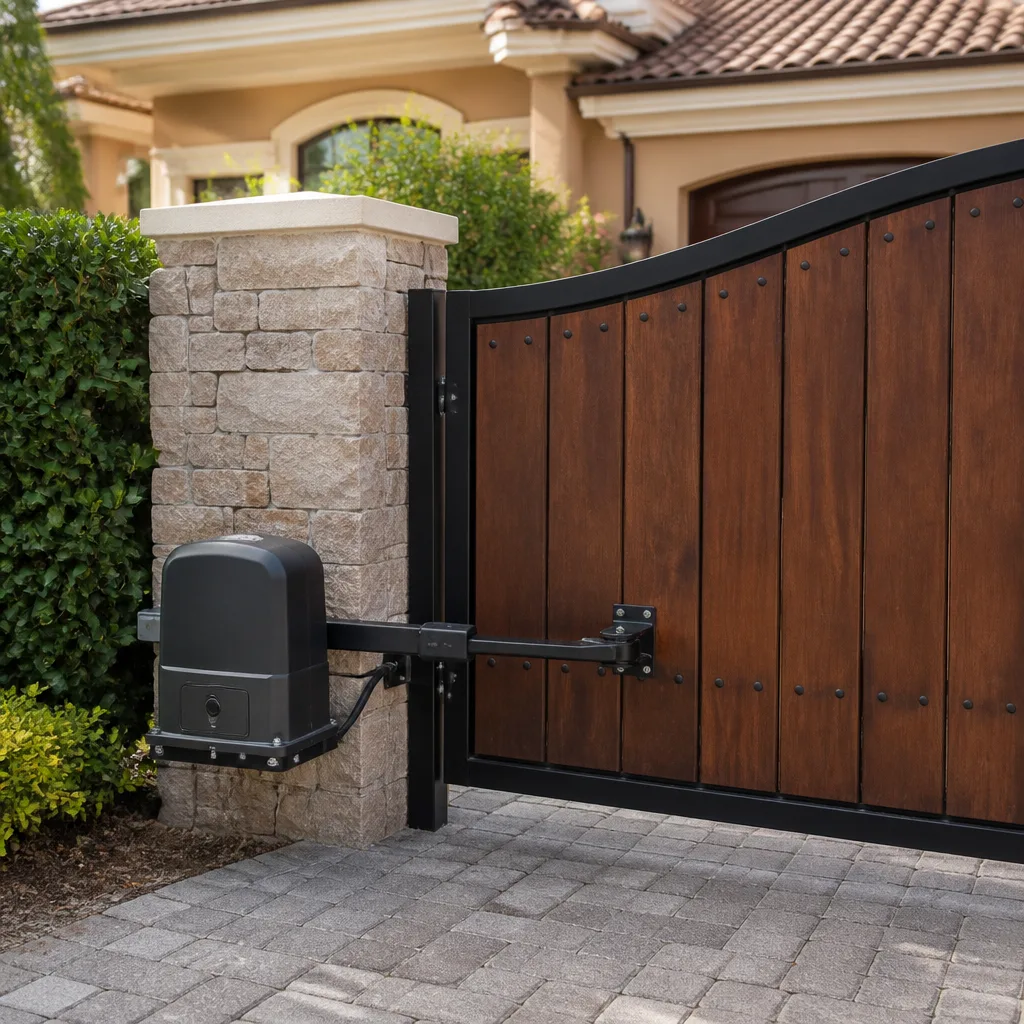
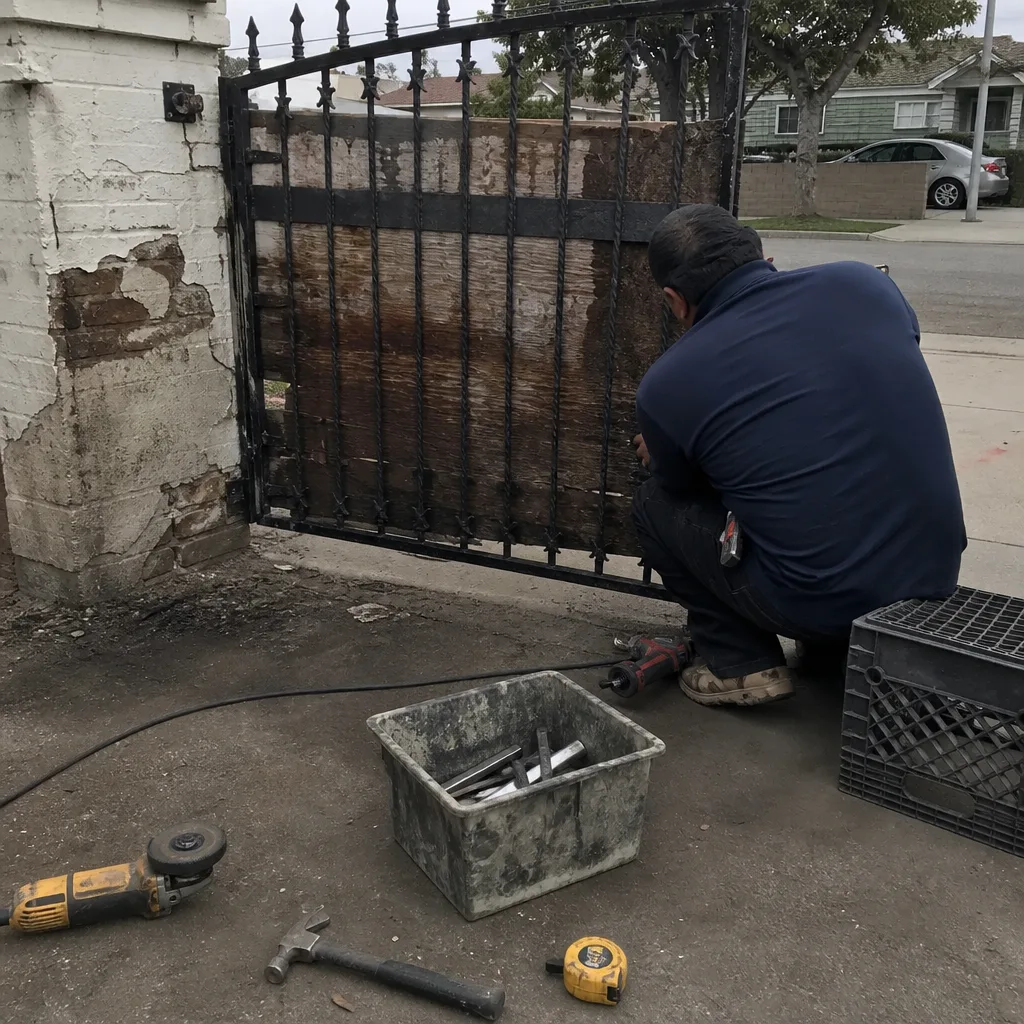 Before
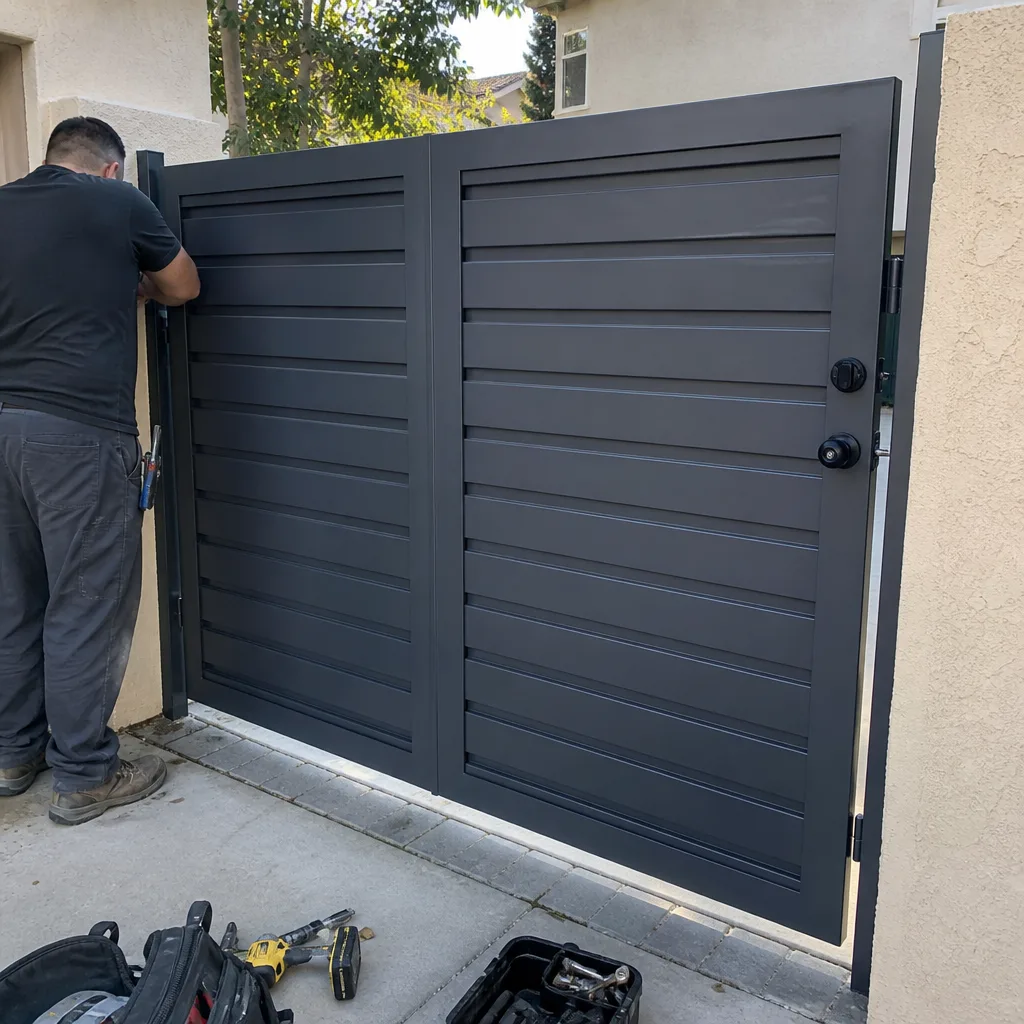 After
After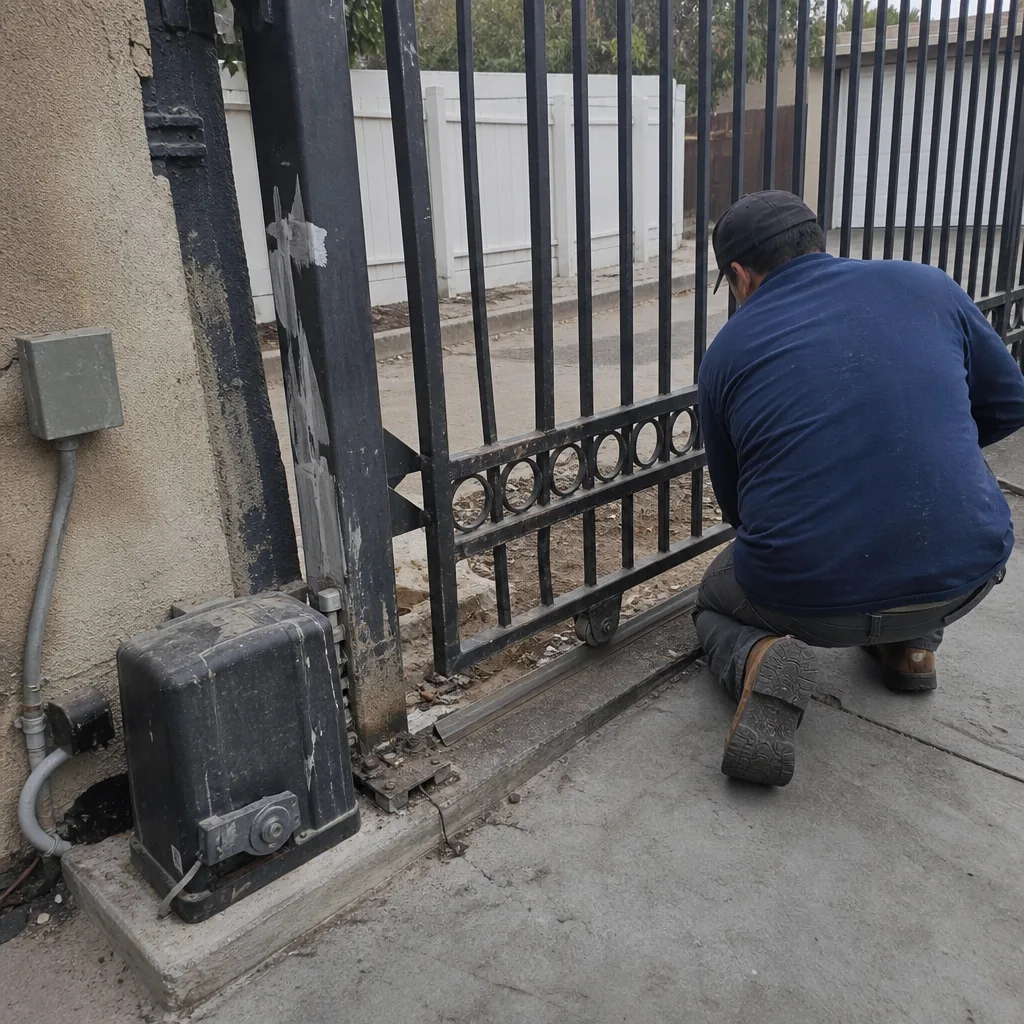 Before
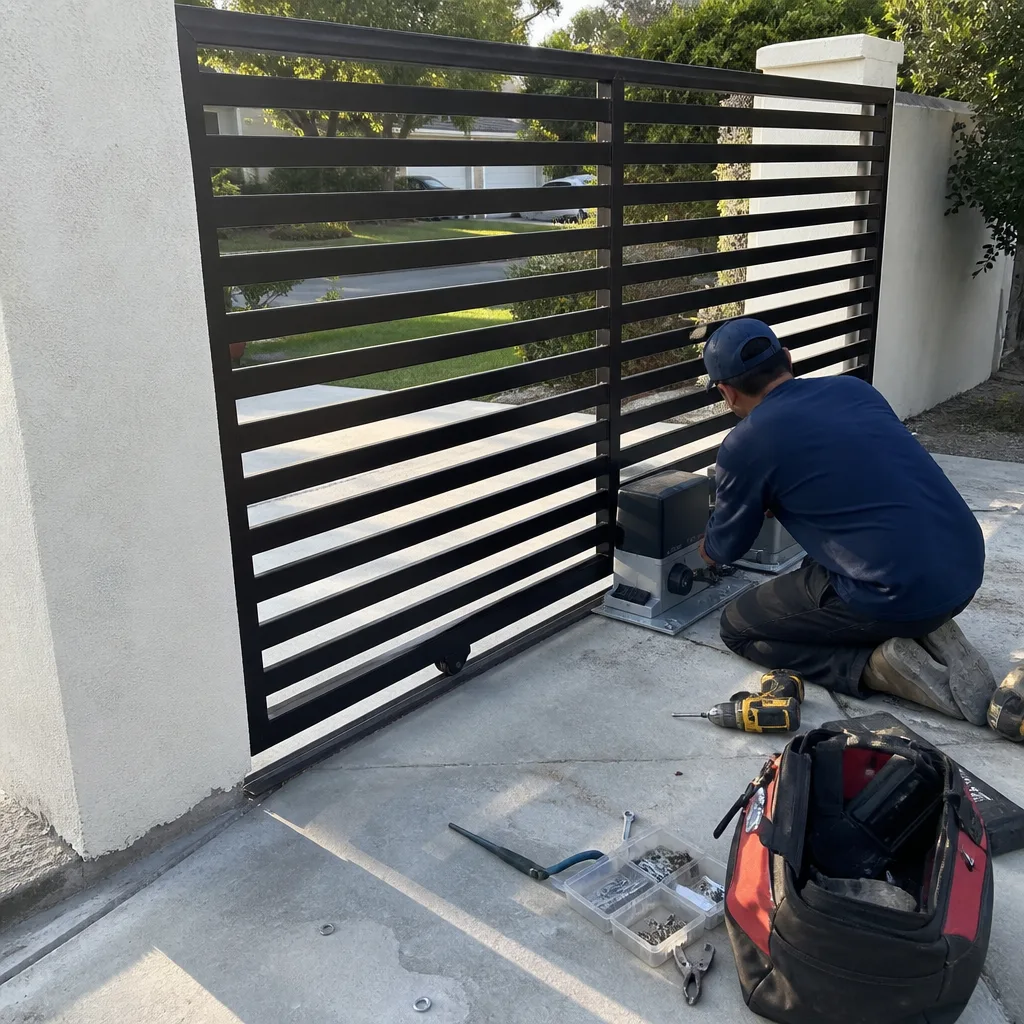 After
After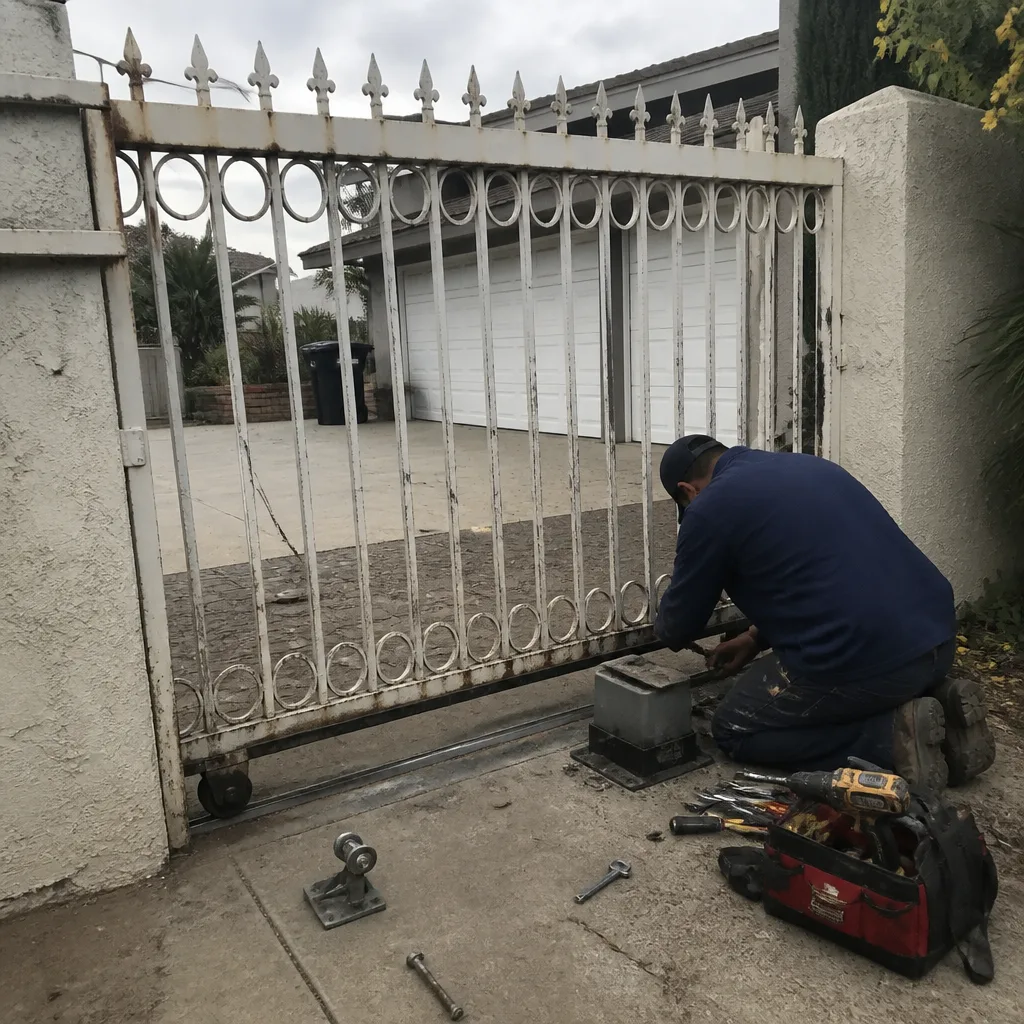 Before
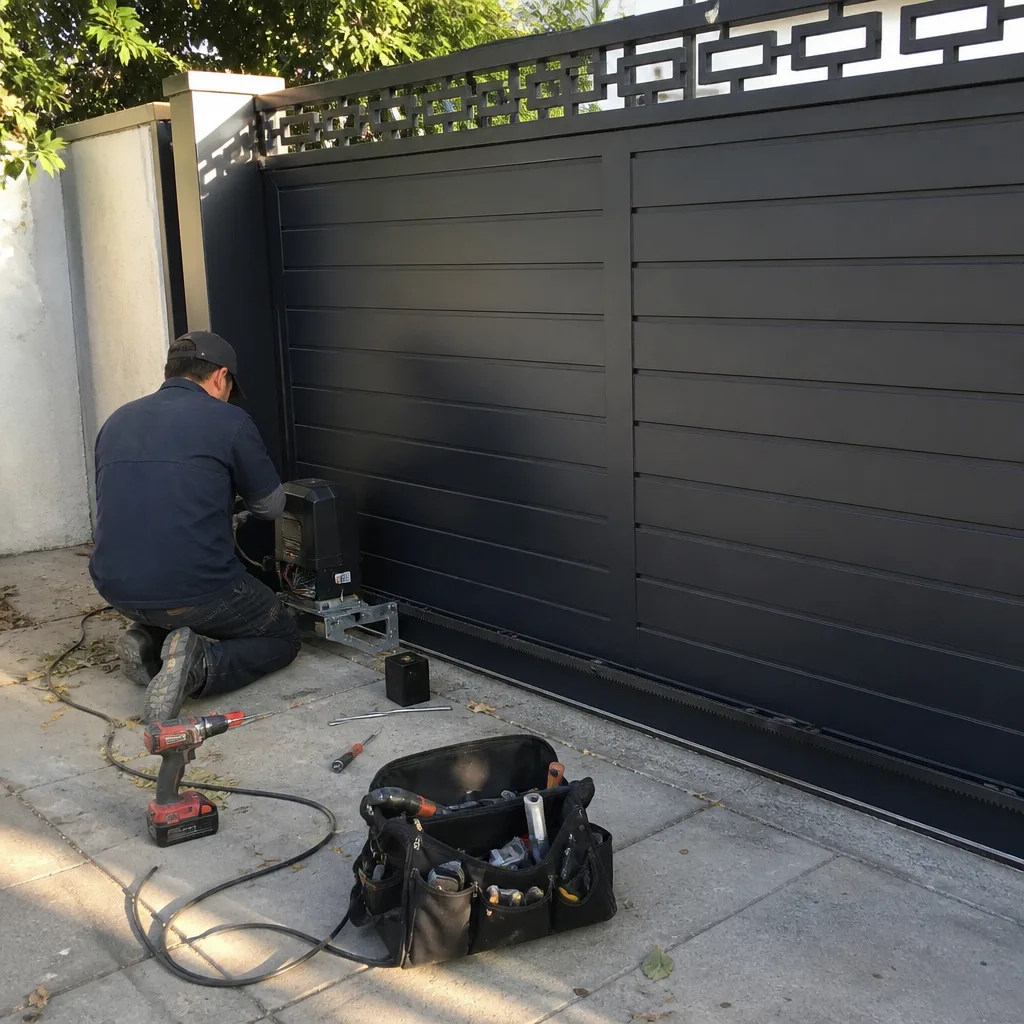 After
AfterGate Repair Warning Signs: A North Hollywood Homeowner’s Reference Guide
Most automatic driveway gates in North Hollywood fail slowly, not suddenly. The motor doesn’t burn out overnight. The hinge doesn’t snap without months of protest first. In our experience, roughly three out of four gate failures we respond to showed clear warning signs for weeks or months beforehand. Homeowners simply didn’t know what to listen for. This guide covers the warning signs that matter, what they mean, what they cost to fix when caught early versus late, and how to tell the difference between a minor adjustment and a serious structural problem. If your gate has been making a new sound, moving slower, or hesitating halfway, this is written for you.
Quick Answer
The most common warning signs of a failing gate are grinding or squealing noises during operation, slow or jerky movement, a gate that sags or lists to one side, repeated opener reversals, and visible rust or cracking at the weld points or hinge mounts. In North Hollywood, repair costs typically range from $145 for a minor hinge adjustment to $1,850 for a full opener replacement, with most repairs falling between $225 and $500 when caught before secondary damage occurs.
Table of Contents
- Noises That Mean Something Is Wrong
- Movement Changes: Slow, Jerky, or Hesitating Gates
- Sagging, Leaning, and Visible Misalignment
- Opener Warning Signs: Reversals, Fault Codes, and Dead Keypads
- Rust, Cracks, and Weld Failures
- A 10-Minute Monthly Walkthrough: What to Check
- What Gate Repairs Cost in North Hollywood
- Common Mistakes to Avoid
- When to Call a Professional
- Frequently Asked Questions
- The Bottom Line
Noises That Mean Something Is Wrong
A healthy automatic gate makes a low, steady hum during operation, followed by a soft mechanical click when the opener finishes its cycle. Anything beyond that deserves attention. The noise your gate makes is the single most reliable diagnostic tool you have, because each sound corresponds to a specific mechanical problem.
Grinding almost always indicates metal-on-metal contact where there shouldn’t be any. The usual culprits are worn hinge bearings, a drive chain that has lost tension and is dragging across the rail, or a wheel that has seized on its track. Left unaddressed, grinding wears components down quickly. A hinge that grinds for six months in the North Hollywood dry season will often seize entirely by late summer.
Squealing is typically a belt-drive opener with a slipping belt, or a pulley bearing that has gone dry. It’s the least expensive problem on this list to fix when caught early, usually a belt tension adjustment or a replacement bearing under $100. It becomes expensive only when it is ignored long enough for the slipping belt to chew through itself.
Banging or slamming at the end of the travel cycle means the opener’s limit switches are no longer stopping the gate at the correct position. The gate is hitting its physical stop at full force. Every impact jars the opener’s internal gears, the hinge welds, and the mounting bolts. In Steel Ranch and Valley Glen neighborhoods, where many homes have heavier solid-steel gates from the 1990s and 2000s, we see this show up as cracked welds within a year of the banging starting.
A rhythmic thumping during movement points to a flat spot on a wheel or a bent track section. The gate pops over the defect on every cycle. It will still open and close, and that is the trap: the thump becomes part of the background noise of the house. Then the wheel fails on a Friday evening and the gate is stuck half-open.
The rule is simple. If your gate makes a sound today that it did not make six months ago, that sound is telling you something specific. Write it down. Note when it happens in the travel cycle. That one piece of information helps a technician diagnose the problem on the phone before they ever arrive.
Movement Changes: Slow, Jerky, or Hesitating Gates
A gate opener is a fixed-speed machine. When it was installed and calibrated correctly, the gate moved at a consistent speed through its entire travel. Any change in that speed means the motor is working harder than it was designed to work, power is not reaching it consistently, or both.
A gate that moves slower than it used to is usually fighting resistance in the mechanical system. The most common causes in the San Fernando Valley are dry hinge pins, a track packed with decomposed granite dust, or wheel bearings that have run out of grease. The opener compensates by pulling more current, which heats the motor windings. Electric motors do not recover from repeated overheating. Each hot cycle shortens the motor’s service life. A new Viking or Ghost Controls opener in North Hollywood costs between $950 and $1,850 installed. A hinge lubrication and track cleaning costs between $125 and $225. The math speaks for itself.
Jerky or stuttering movement is rarely the motor. It’s nearly always mechanical binding: a hinge that moves freely for part of the arc and binds for the rest, a wheel that catches on a track joint, or a chain that rides up over a worn sprocket tooth and drops back down. The fix is usually under $300. The cost of ignoring it is a bent gate frame, because the opener keeps pulling even when the gate binds. Aluminum and hollow steel gates bend before the opener stalls. Once the frame is racked, you are looking at a weld repair or a gate replacement, not just a hardware fix.
A gate that hesitates, then lurches after reversing direction is a classic failing-capacitor symptom on older opener models. The capacitor provides the burst of starting torque. When it degrades, the motor struggles to begin the cycle, then surges once momentum builds. This is a printed-circuit-board and capacitor issue, typically a $180 to $340 repair on most DoorKing and Elite residential openers. The same symptom on a newer opener often points to a failing limit switch assembly instead, so do not guess the part without checking.
- Time your gate’s full travel with your phone stopwatch. Write the number down.
- Repeat the timing once a month. A 15% slowdown from your baseline is worth a service call.
- Watch the gate at the midpoint of travel where it has the most mechanical leverage. Hesitation there is mechanical. Hesitation at the start is electrical.
If the gate has slowed enough that you find yourself waiting on it before backing the car out, the problem is already at least two months old. The best time to call about a slow gate is the first week you notice it.
Sagging, Leaning, and Visible Misalignment
A well-hung gate should be visually square in its frame: the top rail level, the gap between the latch side and the post consistent from top to bottom, and the pickets or slats parallel with the fence line. When those lines drift, the gate is telling you that something structural is moving.
Sagging means the hinge side is no longer carrying the gate’s weight evenly. Pin and barrel hinges wear over time, especially on heavy ornamental steel gates. The barrel elongates, the pin wears thin on one side, and the entire gate drops. The symptom is a latch that no longer lines up with its strike plate or a gate that scrapes the ground on the latch side during the last foot of travel.
This is one of the most common repairs we perform in North Hollywood, and it is usually straightforward. A hinge replacement or the addition of a third hinge runs $145 to $285, depending on the gate’s weight and whether the post needs reinforcement. The mistake we see homeowners make is adjusting the latch or the opener to compensate for a sagging gate instead of fixing the hinge itself. That buys a few months. Then the misalignment returns, usually worse, because the underlying wear never stopped.
Leaning gates point to the post, not the gate. In the Valley’s clay-heavy soil, gate posts set in undersized concrete footings will lean over time as the soil expands and contracts with moisture. The post moves, the gate follows, and the gap at the latch side opens up wide at the top. Repairs range from resetting the post in a proper footing to installing a post brace or a steel stiffener, typically $350 to $750 for a single post. If both posts have moved, the fix is a full frame reset. That is the more expensive job, but it is the correct one. Shimming the hinges to compensate for a leaning post just transfers the stress to the next-weakest component.
Visible gaps that appear between the gate frame and the fence, or between the two leaves of a double gate, mean something has shifted. On double gates, the usual culprit is uneven ground heave at the center stop. On single gates, it is hinge wear or post movement. Either way, the gate is no longer closing the way it was designed to close, and your property line is no longer secure. A gate that does not close flush is also a gate that does not trigger its closer limit switch every time, which means the opener keeps running longer than it should on every cycle.
Opener Warning Signs: Reversals, Fault Codes, and Dead Keypads
Modern gate openers are built to refuse unsafe operation. A gate that reverses mid-cycle and returns to the open position is doing exactly what its safety systems tell it to do. The problem is what triggered that safety response, and that is rarely the opener itself.
Repeated reversals are most often caused by the obstruction sensor reading resistance in the mechanism and interpreting it as something caught under the gate. The true problem is mechanical drag: a failing wheel, a dry hinge, a warped track. The opener reverses because it is trying not to crush a child or a dog. That part of the system is working correctly. The error is upstream. We have diagnosed more than one “bad opener” in North Hollywood that turned out to be a seized wheel bearing on a 600-pound steel gate. The opener was fine. It was doing its job.
Fault codes on the display are your opener’s native language. Every major brand publishes a code chart. A flashing light sequence or a numeric code like a DoorKing 71 or a LiftMaster 41 is a specific diagnostic message, not a generic “something is wrong.” Before you call, write down the code and the pattern of flashes. A technician who knows what a Ghost Controls code 3 means can bring the correct part on the first visit. A technician guessing without the code will leave to order parts and charge you a second trip fee.
A keypad that stopped working or works intermittently is rarely the keypad. Nine times out of ten it is the power supply at the control board, a corroded terminal connection, or a receiver board that has lost its programming. The keypad itself is a simple weatherproof switch. Blaming the keypad is like blaming the light bulb when the switch is bad. On older Elite and LiftMaster systems installed during the 2000s building boom in the Valley, we consistently see failed receiver boards and corroded supply terminals before we see a failed keypad.
An opener that runs but doesn’t move the gate is a stripped gear in the drive assembly, a broken chain connector, or a belt that has lost all tension. The motor will whir away happily while the gate sits still. This one is worth catching early because the motor running against no load is not damaging itself, but the loose chain or belt inside the housing can whip around and damage the wiring harness. The gear replacement itself is usually $195 to $425 depending on the opener model.
We service nine opener brands in regular rotation: LiftMaster, FAAC, BFT, Linear, Viking, Ghost Controls, DoorKing, Elite, and Mighty Mule. The failure patterns are different for each one, but the underlying message is the same across every brand. The opener is rarely the first thing to fail. It is usually the last component in a chain of mechanical problems that started at the hinge or the track months earlier.
Rust, Cracks, and Weld Failures
North Hollywood’s climate is gentler on steel than coastal air, but it is not kind. Summer heat bakes paint. The dry winters allow condensation to sit in the weld joints overnight. And the water from lawn irrigation systems splashes against gate bottoms twelve months a year. For that reason, rust at the base of the gate and around the hinge welds is the most predictable maintenance issue we see.
Surface rust on a powder-coated gate is cosmetic at first. It becomes structural when oxidation works into the joint between two welded members. The rust expands as it forms, prying the joint apart from the inside. What looks like a little bubbling at the weld line is often the early stage of a joint that will crack in eighteen months. Treating surface rust early, with grinding and repainting the affected area, costs $150 to $350. Replacing the gate because the weld joints failed costs $1,800 to $6,000 depending on size and ornamentation.
Cracks demand immediate attention, especially at the hinge mount points or anywhere a weld joins two structural members. A crack will not stop on its own. Every cycle of the gate flexes the crack slightly, and every flex extends it a few thousandths of an inch. The repair for a cracked weld is straightforward for a welder with the right equipment: grind out the crack, reweld the joint, and reinforce with a gusset plate if needed. That runs $185 to $425 at typical North Hollywood rates. The repair gets expensive when the cracked member has twisted out of position and the whole gate needs to be straightened before it can be welded.
Weld failures at the hinge are an emergency, not a scheduling item. The hinges carry the entire weight of the gate. When a hinge weld fails, the remaining hinge suddenly carries double the load it was designed for, and it will fail soon after. A gate that drops off its hinges is a thousand pounds of steel falling uncontrolled. If you see a crack at a hinge weld or a hinge that has shifted visibly, stop operating the gate and call a professional. This is not a repair to defer. Ironworks Gate Co. home page has our contact information, and a live person answers 24 hours a day.
A 10-Minute Monthly Walkthrough: What to Check
This is the routine we recommend to every North Hollywood homeowner with an automatic gate. It takes ten minutes once a month, and it catches virtually every warning sign described in this guide before the repair crosses into four-figure territory.
- Listen. Operate the gate one full cycle from the driveway and stand beside it. A new sound is the first warning sign of every mechanical failure. Note it in your phone.
- Watch the lines. Sight down the top rail. Is it straight? Sight the gap at the latch side. Is it consistent top to bottom? A changing gap means hinge or post movement.
- Check the footing. Walk to the base of the gate and look for rust at the bottom rail, around the hinge welds, and anywhere metal meets concrete. Push lightly on the gate. Movement of more than half an inch at the latch side means hinge adjustment time.
- Test the force. With the gate partway open, push it gently. It should move smoothly with light resistance. Buzzing, grinding, or hard spots in the travel are mechanical problems, not opener problems.
- Check the keypad and remotes. Test every access point once a month. A keypad that needs a code entered twice is warning you about a failing connection or a dying battery in the receiver circuit.
- Clear the track path. Remove anything that has grown into the gate’s path or collected in the track. Decomposed granite from landscaping, grass clippings, and eucalyptus leaves all work their way into wheel tracks and increase the load on the opener.
Ten minutes a month against a $1,850 opener replacement. That is the whole argument for this routine.
What Gate Repairs Cost in North Hollywood
Gate repair pricing in the San Fernando Valley clusters around predictable numbers. The table below reflects what we have billed across North Hollywood, Valley Village, Studio City, and the surrounding areas over the past several years. These are real market ranges, not list prices. Every job is quoted before work begins, and the price is agreed in writing before a single bolt is turned.
| Repair Type | Typical Range in North Hollywood | Time to Complete |
|---|---|---|
| Hinge lubrication and adjustment | $95 - $185 | Same visit, 45-90 min |
| Single hinge replacement | $145 - $285 | Same visit, 1-2 hrs |
| Track realignment and wheel replacement | $185 - $350 | Same visit, 1-2 hrs |
| Weld crack repair (single joint) | $185 - $425 | Same visit, 1-3 hrs |
| Opener gear or capacitor replacement | $180 - $425 | Same visit, 1-2 hrs |
| Keypad or receiver board replacement | $195 - $450 | Same visit, 1 hr |
| Post reset (single post, new footing) | $350 - $750 | 2-3 days, concrete cure |
| Full opener replacement (parts + labor) | $950 - $1,850 | Same visit, 3-5 hrs |
| Complete standard gate replacement | $1,800 - $6,000 | 2-4 weeks, built to order |
Most repairs on this table are single-visit jobs. The written quote you approve is the invoice you pay. Ironworks Gate Co. does not do open-ended hourly billing on repair work, which means the sticker price you agree to is the final number. If a repair reveals a second problem that changes the scope, the new work is quoted before it is started, not added to the bill afterward.
Common Mistakes to Avoid
- Adjusting the latch to fix a sagging gate. The sag is at the hinge, not the latch. Moving the latch just hides the symptom while the hinge continues to wear. Six months later the gate scrapes the ground and now the opener is straining too.
- Ignoring a new noise because the gate still works. Noise is the earliest and cheapest warning sign. Every day a grinding hinge runs is a day of irreversible wear on a $80 part that becomes a $600 repair when the gate frame bends.
- Lubricating with WD-40 or household spray oil. These products clean but do not lubricate under load. Worse, they wash out the existing grease and leave the hinge dry. Use a heavy lithium or moly grease, and wipe away the excess. In North Hollywood’s dusty air, wet lubricant attracts grit and turns into grinding paste within weeks.
- Assuming the opener is dead when the gate stops moving. More than half the opener replacements quoted by other companies turn out to be mechanical failures at the hinge, wheel, or track. A diagnostic visit costs less than a control board, and it answers the question definitively.
- Waiting until a holiday or a heat wave to address the problem. Gate openers and motors fail faster in extreme heat, and summer is when every gate company in the Valley is booked out. The homeowner who services the gate in March waits hours, not days, in August.
- Hiring a general handyman for a structural weld. Gate hinges and frame welds are load-bearing connections on a moving piece of steel. A poor weld fails catastrophically. This is a job for a welder who works on gates specifically, and no one who owns a torch for weekend projects.
When to Call a Professional
Call a professional when the gate makes a new noise, when the movement changes, when the gate sags or scrapes, when the opener reverses repeatedly, or when you see a crack anywhere on the frame or hinge welds. Any one of these, addressed early, is a single-visit repair under $400 in most cases. All of them, ignored, compound into a gate that fails at the worst possible moment: during a heat wave, on a holiday weekend, when half the family is outside and the other half is stranded in the car. Ironworks Gate Co. offers free estimates in North Hollywood. Call (925) 693-7978 and a live person will answer, day or night.
Frequently Asked Questions
Most gate repairs in North Hollywood fall between $225 and $500, with simple adjustments starting around $95 and full opener replacements running up to $1,850. The exact price depends on the failure point, the gate’s weight, and the opener model. Every Ironworks Gate Co. repair is quoted in writing before work begins, so the number you approve is the number you pay. Call (925) 693-7978 for a free estimate, and ask about the $50-off-any-repair-over-$250 offer.
A grinding noise means metal is rubbing against metal where it should not, usually at the hinge bearings, the drive chain, or a seized track wheel. The repair is typically $95 to $350 in North Hollywood depending on the component, and it is far cheaper to fix at the grinding stage than after the gate frame bends. You can also bring us a written estimate from any other company and we will give you a free second opinion.
Yes, most gate repairs in North Hollywood are completed in a single visit, and we keep the most common parts for Viking, Ghost Controls, DoorKing, Elite, and the other major brands on our trucks. A live person answers the phone 24 hours a day at (925) 693-7978, so you can reach someone at midnight just as easily as at noon.
A gate that reverses mid-cycle is responding to its safety obstruction system, but the usual trigger is mechanical drag somewhere in the gate’s travel rather than an actual obstruction. A failing wheel, a dry hinge, or a warped track section all register as resistance, and the opener reverses to avoid crushing anything in its path. The repair is typically under $350 when caught early. Call (925) 693-7978 and describe the symptom; our technician can often diagnose the likely cause over the phone.
Yes, we handle the complete scope of gate automation, including the power run, the loop detectors, the safety edges, and the keypads and access system. If the opener is a brand we service, and we service nine of the major ones, the whole job is ours from the breaker to the gate leaf. The $89 seasonal tune-up covers the safety systems, limit switches, and all mechanical adjustments.
A quality gate opener that is properly maintained should last 10 to 15 years in North Hollywood’s climate. The motors that fail early almost always fail from heat stress caused by mechanical resistance, not from age. Hinges that are kept lubricated, wheels that roll freely, and a track that is kept clear of decomposed granite dust are the three things that give an opener its full service life. Our $89 seasonal tune-up is designed to catch those issues before they age your opener prematurely.
The Bottom Line
Gates do not fail without warning. They grind, they slow down, they sag, they reverse, and they crack, each symptom appearing months before the failure that strands your car in the driveway or drops a thousand-pound panel off its hinges. The homeowner who knows what to look for spends a few hundred dollars on targeted repairs. The homeowner who waits spends thousands on openers, frames, and full replacements. The difference is ten minutes a month and the willingness to call when the first symptom shows up. If your gate has been talking to you, call (925) 693-7978. A live person picks up, day or night, and the estimate is free.
Written by Victor Salinas, Owner at Ironworks Gate Co., serving North Hollywood since 2013.