
Last updated August 25, 2026
Free on-site gate assessment - hinges, posts, and your LiftMaster or Nice gate operator checked before anything is quoted
The assessment is free and the quote is the invoice.
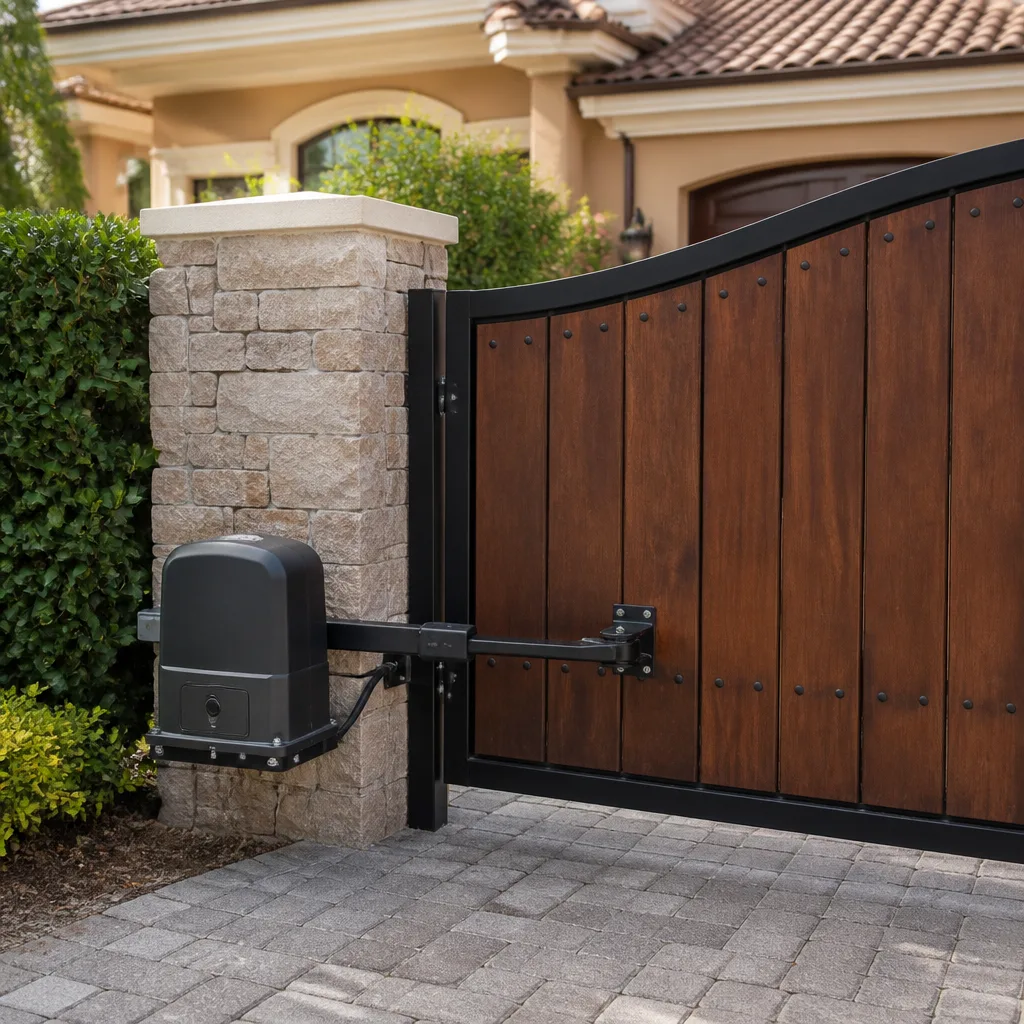
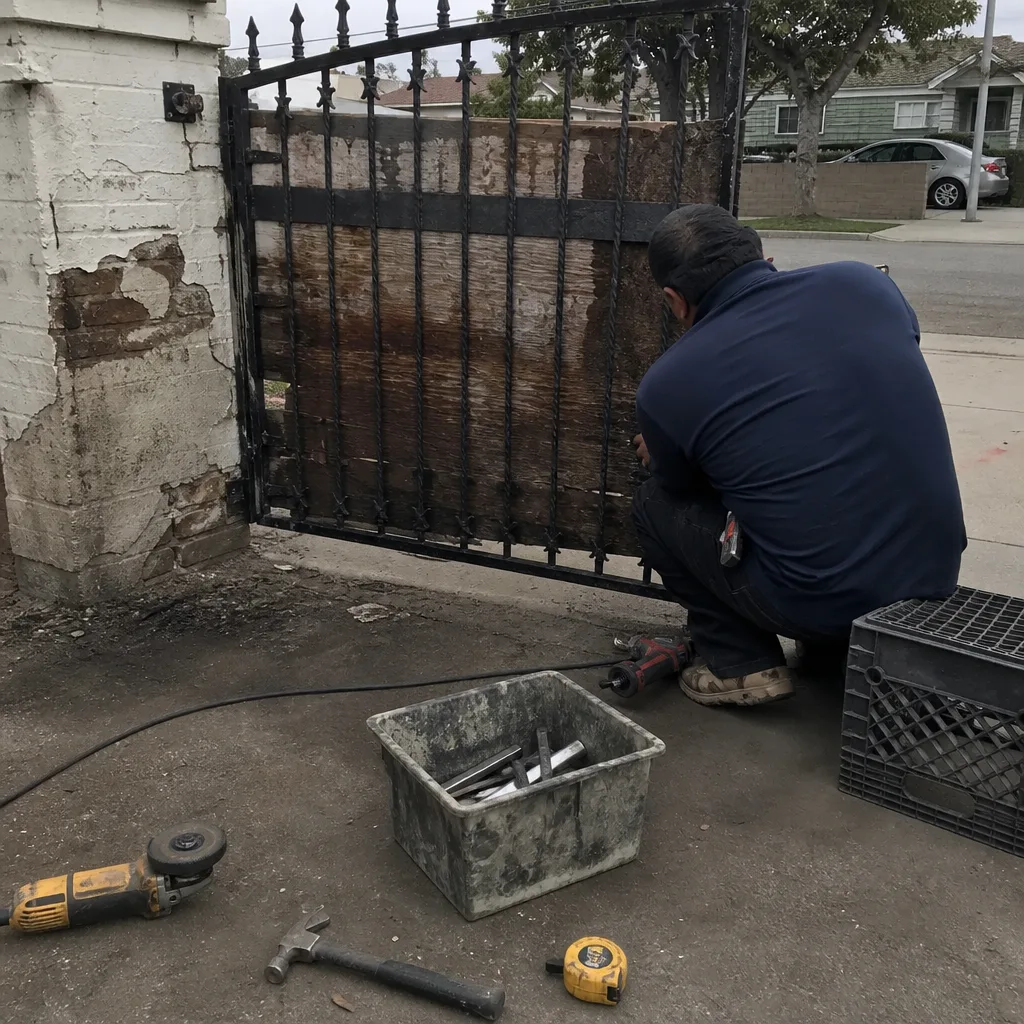 Before
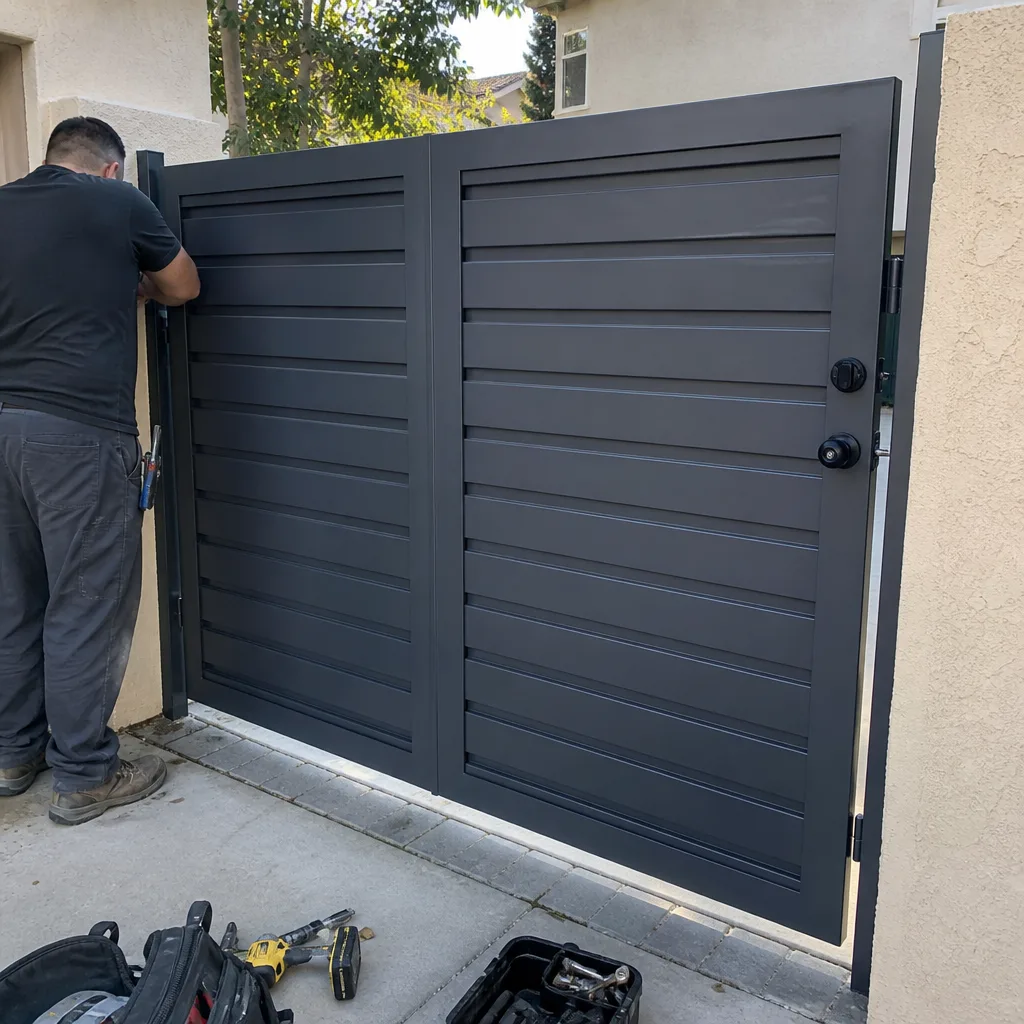 After
After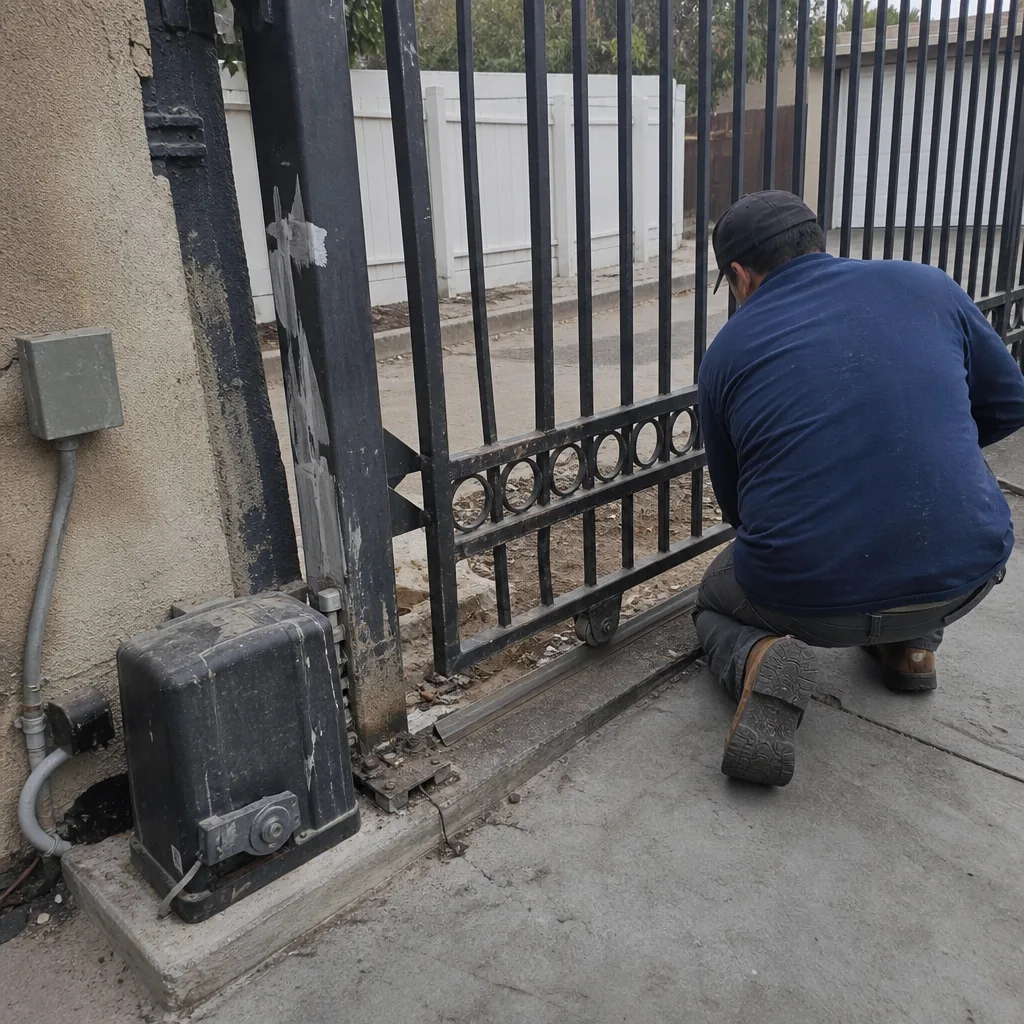 Before
 After
After Before
 After
AfterGate Repair Maintenance Checklist for North Hollywood Homeowners
Most North Hollywood homeowners don’t think about their driveway gate until the morning it won’t open. That’s the day they’re late for work, the delivery truck is blocking Vineland, and the gate motor is making a sound like a coffee grinder chewing a spoon. The surprising part? Nearly every gate failure we see follows the same pattern: small, catchable problems ignored for six months, then one hot afternoon the whole system gives up. This guide is the same checklist our own technicians use when they survey a gate in North Hollywood. It covers the steel, the hinges, the motor, the safety edges, and the access controls, in the order that matters. You’ll learn what to look at monthly, what to leave alone, and when a $89 tune-up saves you a $1,400 motor replacement. Nobody keeps a gate running for twenty years by accident. They keep it running because somebody checked the right things at the right time.
Quick Answer
A proper gate repair maintenance checklist for North Hollywood homeowners covers four areas on a monthly basis: hinge and weld inspection, track and roller cleaning, motor and safety-edge testing, and keypad or remote battery checks. Most North Hollywood gates need a full professional tune-up twice a year, ideally in spring before the Santa Ana winds and in fall after the first rain. The $89 Seasonal Tune-Up from Ironworks Gate Co. covers the full inspection checklist in one visit, and it catches the small problems before they become a gate that won’t budge.
Table of Contents
- Monthly Visual Inspection: What a Healthy Gate Looks Like
- Hinges and Welds: The Blacksmith’s Checklist
- Track and Roller Maintenance for Sliding Gates
- Gate Motor Maintenance: What Homeowners Can Check Safely
- Safety Edges and Photocells: The Non-Negotiables
- Keypads, Remotes, and Access Control: Battery and Code Health
- A Seasonal Maintenance Schedule for North Hollywood’s Climate
- Common Mistakes to Avoid
- When to Call a Professional
- Frequently Asked Questions
Monthly Visual Inspection: What a Healthy Gate Looks Like
Walk out to your gate once a month and spend ninety seconds looking at it the way a mechanic looks at a car. You’re not fixing anything. You’re learning what “normal” sounds and looks like, so that when something changes, you catch it early. In our experience working on gates across North Hollywood, from the hillside properties off Laurel Canyon to the flat lots near the 170, the homeowners who do this simple walk-around call us for a $150 hinge repair instead of a full gate rebuild.
Here’s what a healthy gate looks like. It moves smoothly from fully closed to fully open without hesitating, stuttering, or speeding up mid-travel. It makes a consistent hum from the motor, not a grinding or clicking. The gate leaves hang level, with an even gap at the bottom from one end to the other. When the gate stops, it stops solidly, without bouncing or sagging. The posts are plumb, the welds show no fresh rust, and the safety edges are intact with no cracks in the rubber. If your gate meets all of these, great. Your job that month is done.
- Stand back ten feet and look at the gate’s silhouette. Is it level? Does either leaf sag toward the center?
- Open and close the gate once using the normal remote. Listen to the motor. A healthy LiftMaster or Viking operator produces a steady, even tone.
- Watch the gate’s speed from start to finish. Jerky movement means a track problem or a worn gear.
- Walk the length of the gate and visually check every weld and hinge point for fresh rust streaks or hairline cracks.
- Run a hand along the bottom rail (if reachable from the street side) to feel for dents or damage from the last windstorm.
North Hollywood’s climate is a mixed bag for gate steel. We get months of dry heat, then a few weeks of real rain, and every year the Santa Anas push dust and grit into every track, roller, and hinge. That grit acts like sandpaper on moving parts. A monthly visual check is the cheapest insurance you can buy against that wear.
Hinges and Welds: The Blacksmith’s Checklist
Hinges carry the entire weight of your gate, every minute of every day. A typical steel driveway gate weighs between 400 and 900 pounds, and all of that mass pivots on a handful of steel pins and plates. When a hinge wears, the gate drops a fraction of an inch. That small drop changes the geometry of the entire system: the motor works harder, the latch stops aligning, and the welds at the opposite end take stress they were never designed to take.
Here’s the blacksmith’s way to check hinges:
- Look for orange dust. Rust is the first sign a hinge is grinding metal-on-metal instead of rolling smoothly. Orange powder under a hinge means the bearing surface is failing.
- Rock the gate. With the gate closed, push firmly on the top corner. More than a quarter-inch of movement means the hinge pins or bushings are worn.
- Listen for squeaks during travel. A healthy hinge is silent or nearly silent. Squealing is metal crying for grease, and it’s a sign the hinge has already worn past the point where grease alone will fix it.
- Inspect welds at the hinge plates. Hairline cracks in weld beads are most common on the bottom hinge of swing gates and the trailing edges of slide gates. These cracks spread quickly once they start.
On the weld side, a good rule for North Hollywood homeowners is once a year, take a good look at every structural weld on the gate frame. Pay closest attention after any incident: a delivery truck bump, a teenager leaning on the gate, a windstorm that rattled the leaves. A cracked weld on a gate frame is not something to ignore. The fix is straightforward for a shop that welds: grind out the crack, re-weld, and reinforce the gusset. The cost is a fraction of replacing a gate that folded because nobody caught it.
One note from the shop floor: we service the steel the same way on a two-year-old gate as on a forty-year-old one. The hinge check doesn’t change. Metal is honest. It shows its wear if you know where to look.
Track and Roller Maintenance for Sliding Gates
Sliding gates in North Hollywood work differently than swing gates, and their maintenance needs are different too. A slide gate rides on a steel track laid across the driveway opening, carried by wheels or rollers inside the gate’s bottom rail. That track collects everything: leaves, gravel, dirt, trash blown in from Lankershim, and the fine dust that the Santa Anas push through every gap.
The most common sliding gate failure we see in North Hollywood is not a motor problem. It’s a track problem. A pebble lodged in the track forces the gate wheels to climb over it, which throws the gate slightly out of alignment each time it passes. Over weeks, the gate begins to bind. The motor strains against the resistance. Eventually the motor burns out, and the homeowner believes they need a new opener when all they needed was a clean track and a wheel adjustment.
Here’s the monthly track and roller checklist for a sliding gate:
- Clear the track. Remove leaves, gravel, and debris from the entire track length with a stiff broom or shop vacuum. Do this twice a month during autumn leaf drop.
- Check the wheels. With the gate in the open position, look inside the bottom rail. Wheels should be round, not chipped or flattened. Watch for wobble when the gate moves.
- Feel the track for rough spots. Run your hand along the top of the track, feeling for dents, high spots, or sections that have shifted out of alignment. A track that’s moved even a quarter-inch can cause binding.
- Check the guide rollers. Most slide gates have vertical guide rollers near the top that keep the gate plumb. These wear faster than the bottom wheels and are often overlooked.
- Lubricate the rollers sparingly. Use a dry silicone spray on wheel bearings once every three months. Avoid heavy grease; it attracts the very dust that wears everything down in our climate.
One more thing specific to our area: North Hollywood has a lot of mature trees. Eucalyptus, oak, sycamore. They drop leaves, bark, and seed pods directly into driveway gate tracks all year, not just in fall. If you have a tree within twenty feet of your gate, the track-clearing part of this checklist is a twice-a-month job during the messy seasons, not once a month.
Gate Motor Maintenance: What Homeowners Can Check Safely
Before anything else, a safety note. Gate motors run on 120 or 240 volt power and contain capacitors that can hold a charge even after the power is disconnected. We do not recommend opening a motor housing or opener cabinet unless you know exactly what you’re doing. The checks below are all external, safe, and useful. If any of them reveals a problem, that’s the moment to call a professional rather than reach for a screwdriver.
Here is the safe, homeowner-level motor maintenance checklist:
- Listen to the motor. A healthy opener on a Viking, Ghost Controls, or DoorKing system produces a steady, consistent hum. Grinding means worn gears. Clicking means a capacitor or relay problem. High-pitched whining means a belt slipping.
- Watch for thermal shutdowns. If your gate opens halfway, stops, and won’t respond for several minutes, the motor is overheating. In North Hollywood’s summer heat, a motor that runs hot in July is a motor that will fail in August.
- Check the manual release. Every automatic gate has a manual release mechanism, usually a keyed cylinder or a pull cord. Test it once a year to make sure you can open the gate by hand during a power outage. This is also the feature that lets you get your car out when the motor dies.
- Look for oil leaks. Gear-driven operators contain oil. A small drip or stain on the operator housing means a seal has failed and the gearbox is running low. Low oil kills gears quickly.
- Inspect the chain or belt tension. If your operator drives the gate with a chain or belt, look at the tension. A sagging chain or a loose belt is a ten-minute adjustment for a technician, but a snapped one is a gate that won’t move.
- Test the safety edge. With the gate closing, press firmly on the rubber safety edge strip that runs along the leading edge of the gate. The gate should immediately stop and reverse direction. Do this test monthly.
- Test the photocells. Photocells are the small sensors mounted near the bottom of the gate posts, one on each side. While the gate is closing, pass your foot through the beam between them. The gate should stop and reverse. Test monthly.
- Inspect the safety edge rubber. Look for cracks, splits, dry rot, or sections where the rubber has pulled away from the mounting channel. North Hollywood’s UV exposure is brutal on rubber components; a safety edge that’s dried out and cracked should be replaced before it fails a real-world test.
- Clean the photocell lenses. Dust and spider webs on the lenses can block the beam and cause the gate to refuse to close, or worse, cause the system to override the safety and close anyway. A soft cloth and a two-second wipe is all it takes.
- Check the photocell alignment. If the gate beeps or refuses to close, the photocells may have been knocked out of alignment. Small brackets bend easily. This is a quick fix, but it needs to be done correctly.
- Test every remote. All of them. The one in the second car, the one in the kitchen drawer, the one your teenager lost under the seat. Remotes fail quietly, and it is always the spare that’s dead when you need it most.
- Check remote batteries. A remote with a weak battery may work from twenty feet but fail from inside the car at the end of the driveway. Replace batteries annually, all remotes at once.
- Test the keypad. Enter the code slowly and deliberately. If the gate hesitates or requires multiple attempts, the keypad contacts may be wearing. Also check that the keypad housing is still sealed against rain and sun.
- Review your codes. Once a year, think about who has your gate code. If you gave it to a contractor, a housecleaner, or a neighbor’s kid, and they no longer need access, change the code. This is home security, not paranoia.
- Check the battery backup. Many modern openers have a battery backup that keeps the gate working during a power outage. If yours has one, test it once a year by cutting power to the opener (safely, at the breaker) and running the gate on battery.
- Check the gate visually every month: level, quiet, smooth, no rust streaks.
- Clean sliding gate tracks twice a month during leaf season.
- Test safety edges and photocells monthly. This is the non-negotiable.
- Schedule the professional tune-up in spring and fall.
- Replace remote batteries annually and review gate codes twice a year.
- Never ignore a cracked weld or a sagging gate. Small fixes stay small.
- Greasing the track on a sliding gate. It seems logical, but grease on the track attracts dirt and creates a paste that accelerates wear. Tracks should be clean and dry. Lubricate bearings sparingly with dry silicone, never the track surface itself.
- Ignoring a slow gate. A gate that opens more slowly than it used to is telling you something: a weak capacitor, a failing gearbox, or a motor that’s working too hard. Every month it’s ignored, the repair cost goes up.
- Propping the gate open with a stool or brick. We see this constantly in North Hollywood. The gate drifts, the object falls, the gate closes on the object or the car, and the damage is worse than the original problem. Use the manual release instead.
- Power-washing the gate motor. Pressure washing is great for the driveway, terrible for an opener cabinet. Water forced into the motor housing ruins electronics. Cover the motor before you wash, or keep the spray well away.
- Giving the gate code to everyone. It’s easy to hand out, and it never gets taken back. Review codes twice a year and remove anyone who no longer needs access.
- Waiting until the gate fails to look at it. This is the big one. A gate is not a lightbulb. It doesn’t give one warning and then fail. It gives dozens of warnings over months. The homeowners who catch the warnings pay for a small repair. The ones who don’t pay for a new opener.
- Replacing batteries without checking the contacts. Corroded battery contacts in a remote or keypad will kill new batteries within weeks. If a remote eats batteries, clean the contacts or replace the remote.
One more thing worth knowing. Different opener brands have different service intervals and failure modes. We service nine major brands, and each has its own character. A Ghost Controls opener tends to be gentle and quiet but sensitive to voltage drop from an undersized power line. A Viking opener is built like a tank but needs its gear oil checked on schedule. A DoorKing is reliable for decades but its limit switches need periodic adjustment. None of this matters much if the external checks are done monthly and the professional tune-up happens twice a year.
Safety Edges and Photocells: The Non-Negotiables
Safety edges and photocells are the parts of your gate that protect people, pets, and cars from getting crushed. They are not optional accessories. They are the difference between a gate and a liability. In California, automatic gates are required to have entrapment protection, and a gate that closes on a child or a pet is the worst thing that can happen on a property. These components need to be tested regularly, the same way you test smoke detectors.
Here’s the safety checklist, in the order a North Hollywood homeowner should follow:
We will be direct here. If your safety edge or photocells do not pass the monthly test, stop using the gate in automatic mode until it’s fixed. Use the manual release, park the car outside, and call a professional. The cost of a safety edge replacement or photocell realignment is modest. The cost of a gate that closes on someone is not something any homeowner wants to think about.
Keypads, Remotes, and Access Control: Battery and Code Health
The access control side of a gate system is the part homeowners interact with most and maintain least. Remotes get dropped, keypads get sun-baked, and intercom systems quietly accumulate forty years of obsolete codes for dog walkers and housekeepers who no longer work there. A little attention here prevents both a security problem and a convenience problem.
Monthly access control checklist:
Better systems from brands like Elite and DoorKing include a log that records every time the gate was opened and by which code or remote. If your system has this, it’s worth reviewing the log quarterly. You will see patterns: a code being used at odd hours, a remote you don’t recognize, or a visitor code that was never removed. Most North Hollywood homeowners find this reassuring rather than invasive. It’s your gate. You should know who’s opening it.
A Seasonal Maintenance Schedule for North Hollywood’s Climate
North Hollywood’s weather pattern is predictable enough to build a maintenance calendar around. Hot, dry summers. Mild, occasionally wet winters. Santa Ana winds in fall and early winter that blow dust and debris into everything. Here’s the schedule we recommend to our own customers.
Spring (April-May): The Main Tune-Up. This is the time for the $89 Seasonal Tune-Up. After the winter rains, check for rust that’s developed, clear out drainage channels under the gate, inspect welds for corrosion, and test the full safety system. Do this before the summer heat puts extra strain on the motor.
Summer (July-August): Motor Watch. High temperatures push gate motors to their limit. Watch for thermal shutdowns and sluggish performance in the afternoon heat. Keep the motor housing clear of plant growth and debris. If the motor is running hot in July, address it before a failure in August.
Fall (October-November): Santa Ana Prep. Before the winds arrive, clear all loose debris from around the gate and track. Check that the gate leaves are secure and balanced. The Santa Anas don’t usually damage a gate directly, but they throw branches and debris into tracks and knock photocells out of alignment. Trim any tree branches that hang over the gate. This is also the season to test the manual release, since wind-related power outages are common.
Winter (December-January): Post-Rain Check. After each significant rain, inspect the bottom rail and hinges for water pooling. North Hollywood doesn’t get heavy rain often, but when it does, it finds every low spot. Also test the safety edges, since rubber components contract in colder weather and are more likely to crack.
The full seasonal tune-up twice a year, spring and fall, is the core of a long gate life. The monthly checks are the maintenance between tune-ups. Together, they cover the gate the way a homeowner needs it covered: so it simply never has a bad morning.
Key Takeaways
Common Mistakes to Avoid
When to Call a Professional
Some jobs are homeowner checks, and some are professional territory. Call a gate technician when you see a cracked weld, a gate that’s sagging more than a quarter-inch, a motor that’s running hot, safety edges that fail their test, or any electrical issue that you’re not trained to handle. High-tension springs, motor capacitors, and any wiring connected to 120 or 240 volts are firmly in the “trained professional” category. Trying to fix these without the right knowledge and tools can cause serious injury.
Ironworks Gate Co. offers free estimates in North Hollywood. We will come out, look at the gate, and give you a written price before any work starts. Call (925) 693-7978 and a live person will answer, any time of day or night. No voicemail trees, no callback queues. If the gate is making you nervous, call. The estimate is free, and the answer might be simpler and cheaper than you expect.
Frequently Asked Questions
Gate repair in North Hollywood typically runs between $150 and $800 depending on the component. A hinge replacement or track realignment is usually $150 to $350. A safety edge replacement is $150 to $300. A motor or opener replacement runs $600 to $1,500 depending on the brand and model. We quote every job upfront with a written price before any work starts, and we offer $50 Off Any Repair Over $250. Call (925) 693-7978 for an exact quote.
A driveway gate should have a professional service twice a year, in spring and fall. Between professional visits, homeowners should do the monthly visual checks and track cleaning described in this guide. North Hollywood’s mix of summer heat, Santa Ana dust, and winter rain makes the twice-yearly schedule the right one for local gates. The $89 Seasonal Tune-Up covers the full checklist.
Most gate repairs in North Hollywood are completed in a single visit. We arrive with the tools and parts for the most common failures, and we’re trained on nine major opener brands so the correct fix happens on the first trip. Call (925) 693-7978 for the fastest scheduling, and a live person will answer.
A full gate installation from Ironworks Gate Co. includes the gate fabrication or ordering, posts and hinges, the opener and motor, safety edges and photocells, access controls like keypads or intercoms, and the complete electrical connection. We handle the power run from your panel to the gate operator. Every installation is quoted in writing before work begins and backed by our 90-Day Done Right Promise. See our Ironworks Gate Co. home page for the full scope of services.
Yes. We run the power from your electrical panel to the gate operator, including any needed conduit, trenching, and breaker work. We also install and test all safety edges and photocells to meet California entrapment protection requirements. Everything is quoted upfront, and the work is backed in writing with the 90-Day Done Right Promise.
We service and install nine major gate automation brands, including Viking, Ghost Controls, DoorKing, and Elite, along with LiftMaster, FAAC, BFT, Linear, and Mighty Mule. If your opener is on that list, we can repair it correctly on the first visit. If it’s a brand we don’t service, we’ll tell you honestly and point you in the right direction.
A gate that opens by itself usually has a stuck remote button, a crossed signal from a neighbor’s system, or a failing receiver board. A gate that refuses to close usually has a blocked or misaligned photocell, a dirty safety edge contact, or a track obstruction. These are common problems with straightforward fixes, but they need a technician to diagnose the exact cause. Call (925) 693-7978 for a free estimate.
Yes. Ironworks Gate Co. offers a permanent 5% Senior and Veteran discount on all services, every day. We also offer a Free Second Opinion on Any Written Estimate, which means if another company quoted you a repair, we’ll look at the gate and give you our own assessment at no charge. That’s a square deal for North Hollywood homeowners.
The Bottom Line
A gate that gets a monthly look, a clean track, and a twice-yearly professional tune-up will outlast the neighbors’ gates by a decade. The maintenance is not complicated, but it does need to be consistent. Check the hinges, the track, the motor sound, the safety edges, and the access controls every month. Schedule the professional service every spring and fall. When something looks or sounds wrong, call before it breaks. In North Hollywood, the homeowners who follow this checklist call us for a $150 hinge instead of a $1,400 motor. That’s the entire point of maintenance: pay attention now, keep the gate running for another twenty years, and never have a morning where the gate won’t open. If you want a professional to walk the checklist with you, the $89 Seasonal Tune-Up covers everything in this guide, and we’ll quote any repairs in writing before a single bolt is turned.
Call Ironworks Gate Co. at (925) 693-7978 for a free estimate. A live person answers, 24 hours a day, 7 days a week. Done right, and backed in writing.
Written by Victor Salinas, Owner at Ironworks Gate Co., serving North Hollywood since 2013.