
Last updated August 25, 2026
Free on-site gate assessment - hinges, posts, and your LiftMaster or Nice gate operator checked before anything is quoted
The assessment is free and the quote is the invoice.
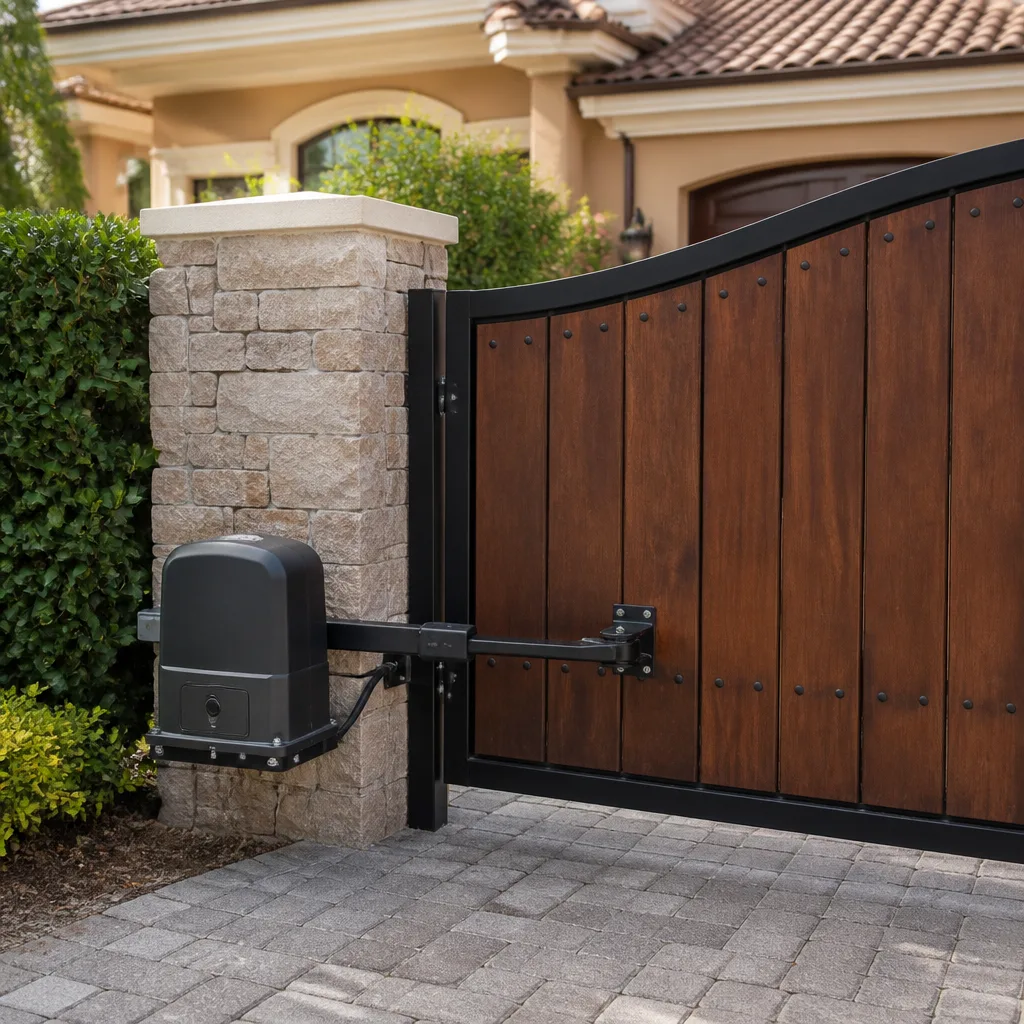
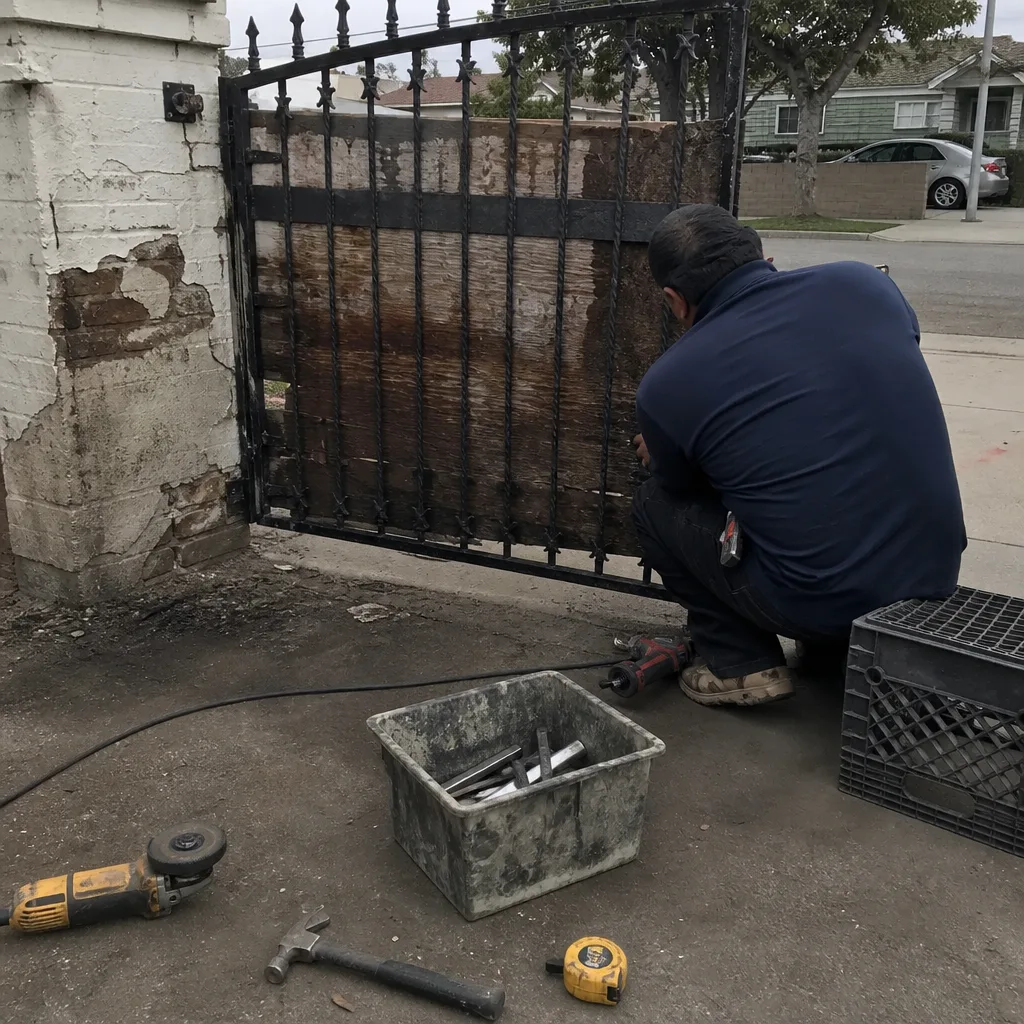 Before
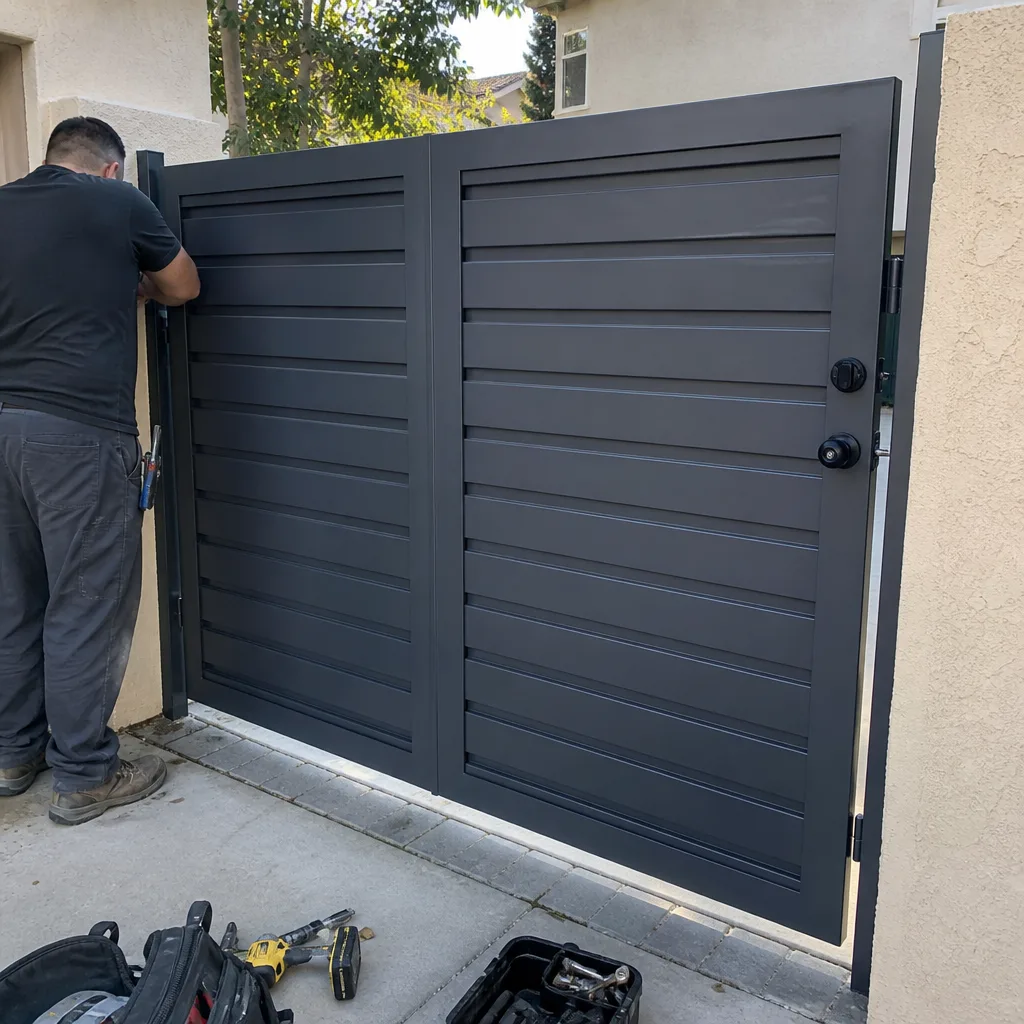 After
After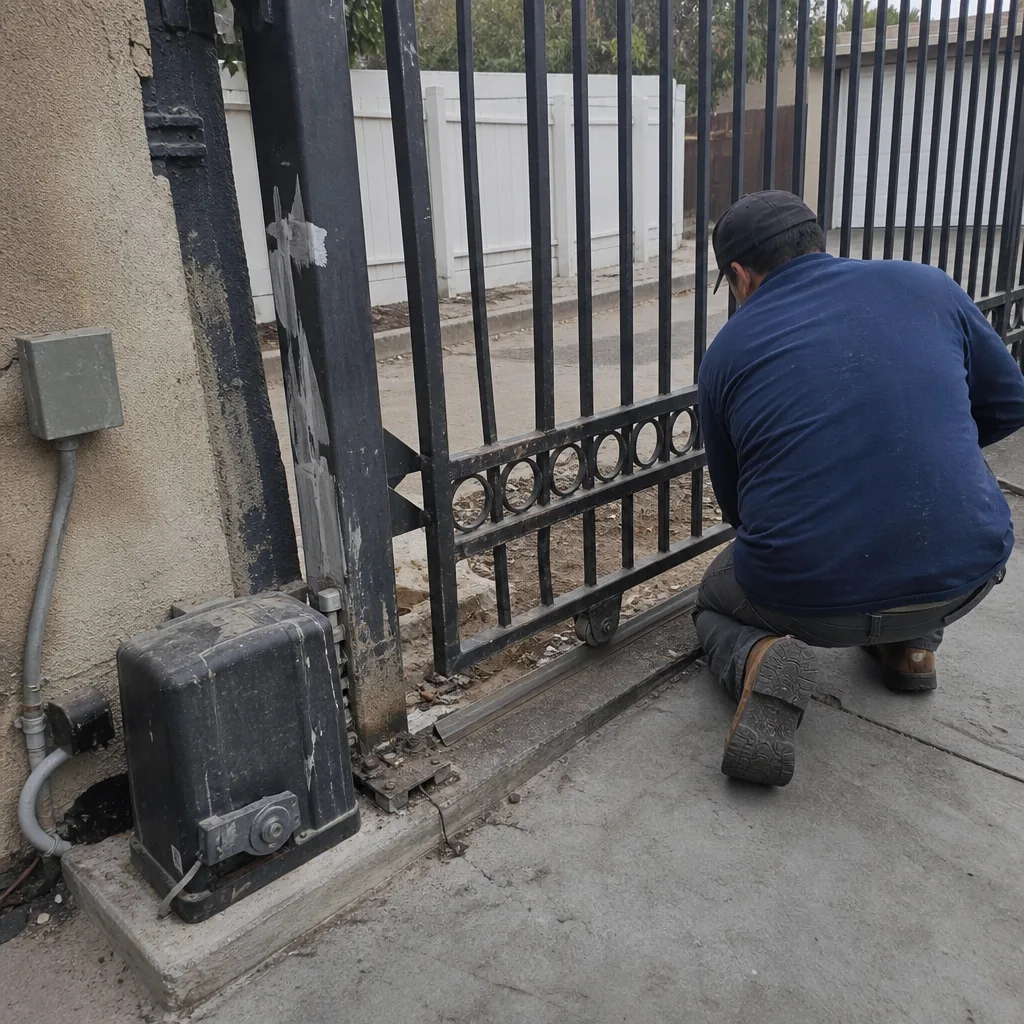 Before
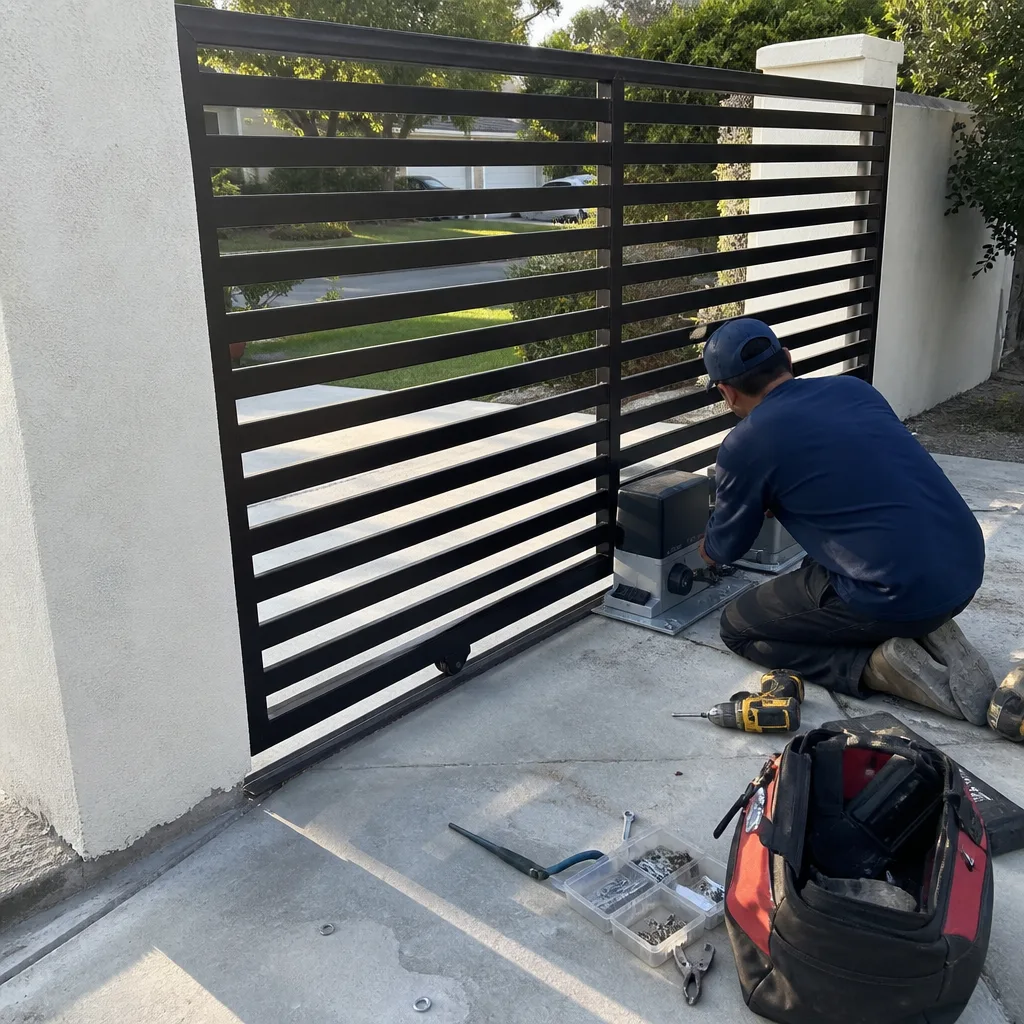 After
After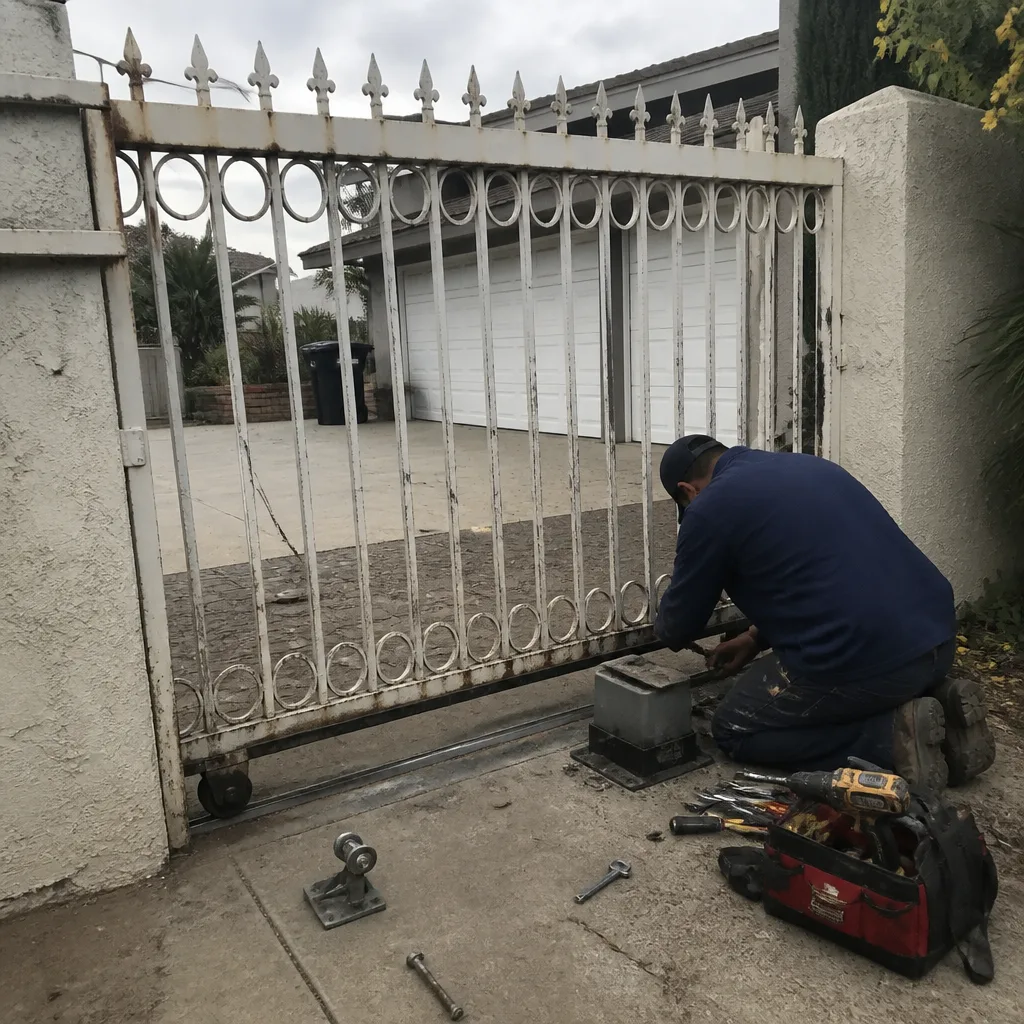 Before
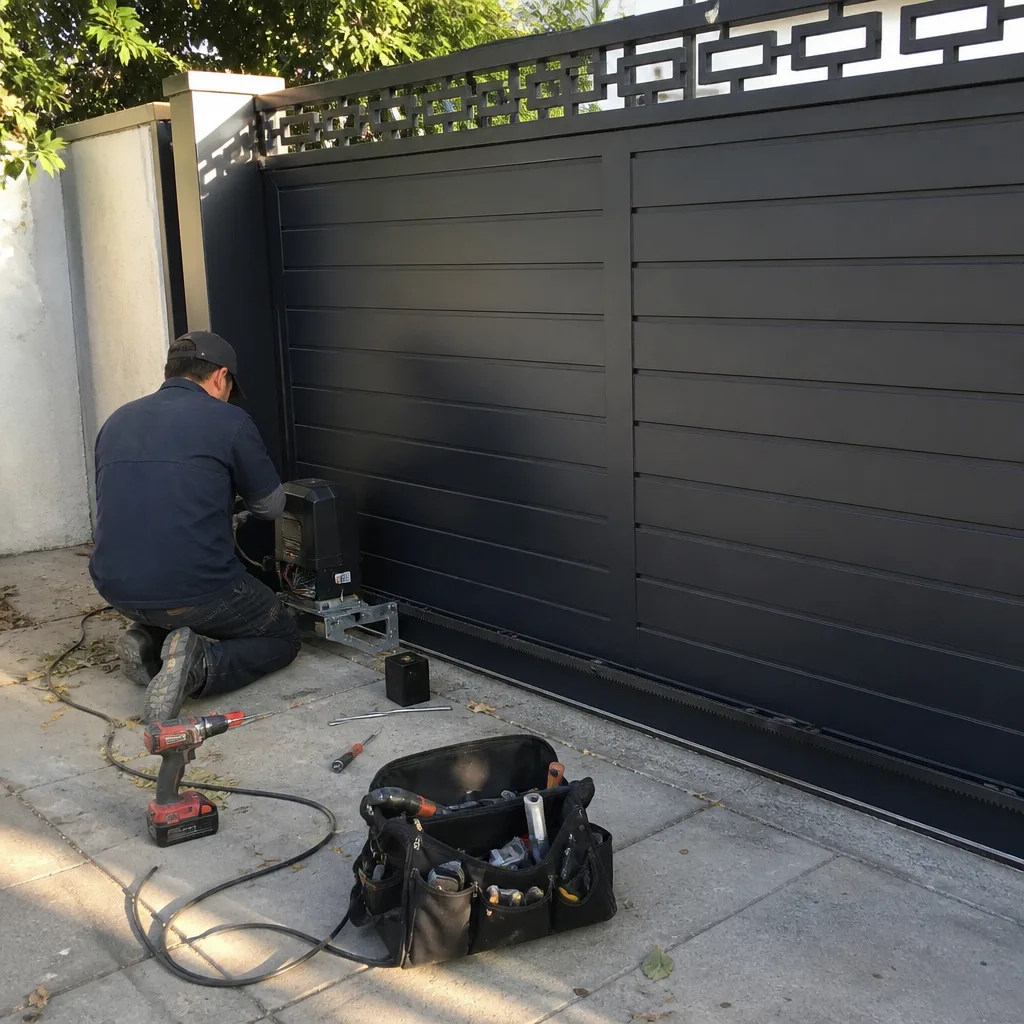 After
AfterSeasonal Gate Repair Care for North Hollywood: Year-Round Homeowner’s Guide
Most gate failures in North Hollywood do not happen on the day the gate finally stops moving. They start months earlier, as a slow grind against a hinge, a motor working harder than it should, or a wheel fighting a track that heat has quietly warped. Homeowners call us when the gate is already dead, but the truth is that a gate usually announces its problems for weeks before it quits. This guide explains what to check each season, what North Hollywood’s specific climate does to gate hardware and electronics, what a seasonal tune-up should include, and when a repair is simple enough to schedule at your convenience versus when it needs a same-day call. You will learn the warning signs that a trained technician looks for, how to keep a gate closing like the day it was hung, and what honest seasonal maintenance actually costs in this part of the San Fernando Valley.
Quick Answer
Seasonal gate care in North Hollywood means checking hinges, wheels, tracks, and opener force settings four times a year, with extra attention in summer when Valley heat expands metal and stresses motors, and in winter when rain exposes weak seals and rust. A professional seasonal tune-up in North Hollywood typically runs $89 to $165 and should include lubrication, limit adjustment, safety sensor testing, and a written report of any worn parts. Done consistently, this prevents most mid-year breakdowns and keeps a gate operating smoothly for 20 to 30 years.
Table of Contents
- Why North Hollywood’s Climate Is Harder on Gates Than Homeowners Expect
- Spring Gate Care Checklist for North Hollywood
- Summer Heat and Your Gate Motor: What the Valley Sun Actually Does
- Fall Maintenance Before the Rains: Seals, Sensors, and Drainage
- Winter Wind and Wet Weather: The Season of Electrical Gremlins
- What a Professional Seasonal Tune-Up Actually Includes
- Signs Your Gate Needs Repair Now, Not Next Season
- Common Mistakes to Avoid
- When to Call a Professional
- Frequently Asked Questions
Why North Hollywood’s Climate Is Harder on Gates Than Homeowners Expect
North Hollywood sits in a specific climate band that punishes gate hardware differently than the Westside or the coast. We get 90 to 105 degree days from June through September, followed by cool, damp winter mornings. That swing from hot, dry afternoons to 45-degree nights means metal expands and contracts every single day, not just seasonally. Over the course of a year, a steel gate in the Valley goes through hundreds of thousands of tiny expansion cycles. Most of that movement gets absorbed by hinges and rollers, which is exactly why those parts wear out faster here than they do in Santa Monica or Burbank.
There is also the matter of dust and debris. North Hollywood streets carry fine silt from the hills, and the Santa Ana winds push it into gate tracks, keypads, and motor housings. We regularly see gates in the Valley where the track is packed with a gray paste of dust and old grease, forcing the motor to work against real resistance. On a 1/2 horsepower opener, that extra drag shortens the motor’s life meaningfully. Then there is the rain question. North Hollywood averages about 15 inches of rain per year, but it tends to arrive in a handful of concentrated storms. That pattern means drainage, seals, and rust prevention matter more than the annual average suggests. A dry spell followed by a heavy storm finds every crack in a gate’s paint, every weak spot in a control board enclosure, and every splice that was not properly sealed.
Spring Gate Care Checklist for North Hollywood
Spring is the season when we get the most calls from homeowners who opened their gate for the first warm weekend and heard a scrape, a squeal, or a thud that was not there in December. The winter rains have done their work on the lubricant, and the first hot stretch is about to stress anything that is already marginal. Here is a simple, ordered checklist for spring:
- Listen to the gate operate twice. Stand at the hinge post, then at the motor. Any new sound is a signal. A rhythmic squeak usually means a dry hinge or roller. A grinding sound means metal-on-metal contact somewhere. A slow, labored start means the opener is working too hard.
- Check the gate’s position at rest. The gate should sit level and true. A visible sag on the latch side, even a quarter inch, means the hinge bolts have loosened or the post has shifted during winter rain.
- Look at the track and wheels. For sliding gates, clear out any packed dirt, and check the wheels for flat spots. North Hollywood dust hardens like concrete once it gets wet and dries, so a flat blade screwdriver or a stiff brush is often needed, not just a hose.
- Test the safety reverse. Place a traffic cone or a trash can in the gate’s path and close the gate. It should stop and reverse before contact. This is a good time to check photo eye alignment too, since winter storms often knock them slightly out of line.
- Inspect the chain or belt tension. A chain that sags more than an inch at the midpoint or a belt with visible slipping is wearing the sprockets and pulley. On swing gates, this is the season to check the operator arm connection points for play.
- Rebuild lubrication on hinges, rollers, and the operator arm. Use a dry-film or silicone-based lubricant, not WD-40. WD-40 is a solvent and will strip away the grease that the hinge needs. A lithium or moly-based grease on pivot points and a dry silicone spray on rollers works well in North Hollywood’s dust.
We tell homeowners that a spring check takes 20 minutes and prevents 80% of the calls we show up for in July. The gate is a machine with moving parts, and like any machine, it answers to attention.
Summer Heat and Your Gate Motor: What the Valley Sun Actually Does
Heat is the number one seasonal killer of gate electronics in North Hollywood. Not because the circuit boards melt, but because the heat changes the operating environment in three specific ways that each make the motor and the boards work harder:
- Thermal cutout cycling: Most residential gate openers have an internal thermal protection switch that shuts the motor off when it overheats. On a 100-degree Valley afternoon, the motor housing itself may already be at 120 degrees before the opener runs a single cycle. Add a heavy gate and a tight chain, and the opener will trip its thermal protection after two or three open-close cycles, leaving the gate dead until the motor cools. Homeowners often call us because “the gate works in the morning but not in the afternoon” - that is textbook thermal cycling.
- Metal expansion on the gate and track: A 16-foot steel gate can grow a measurable fraction of an inch in the summer heat. If the hinges were installed tight in January, that expansion turns into binding force in July. We see this most often on swing gates that were hung with minimal clearance, and on sliding gates whose track was aligned on a cool day.
- Battery and capacitor degradation: Swing gate openers with battery backup, and most slide gate openers, use electrolytic capacitors in the control board. These components age faster in sustained heat. A capacitor that is marginal may work fine at 70 degrees and fail completely at 95. If the gate was intermittent last summer and fine all winter, the board is the culprit in most cases.
For summer operation, we recommend running the gate through a full cycle on a cool morning about once a week, and keeping an eye on how hot the motor housing feels after a cycle on a hot afternoon. A motor that is too hot to hold a hand against for more than a few seconds is a motor that is working too hard. In our experience, that usually comes back to chain tension, track cleanliness, or a gate that has picked up enough weight in sun-bleached paint and rust to exceed the opener’s rating.
Fall Maintenance Before the Rains: Seals, Sensors, and Drainage
Fall is the last realistic window to do the weatherproofing work that winter will test. Once the first heavy rain arrives, any gap, crack, or exposed wiring becomes an active problem, and repair work becomes slower and messier. In North Hollywood, the first real storm usually shows up in November or early December, so October is the month we recommend for this work.
Walk the gate line and look at the ground first. Is there standing water anywhere near the track or the hinge post? North Hollywood’s flat lots and clay-adjacent soil mean that drainage is often the difference between a control board that lasts 10 years and one that fails the first winter. If water pools near the gate operator, the fix may be as simple as regrading the soil or adding a small channel drain. In some cases, we have raised the operator pad by two inches and solved a recurring moisture problem permanently.
Then check the seals on the operator housing, the keypad, and any junction boxes. A hairline crack in a plastic enclosure is enough to let in driven rain. In North Hollywood, wind-driven rain is a real thing during Santa Ana-adjacent storm patterns, and water can travel upward into enclosures. Photo eye lenses should be cleaned and their hoods checked. Keypads with cracked membranes should be replaced before water gets to the contact points.
Finally, look at the gate’s own paint and rust. Surface rust on a steel gate is normal after a few years, but fall is the time to knock it down with a wire brush, treat it with a rust converter, and touch up the paint. A gate that is left to rust through the winter will be visibly pitted by spring, and the cosmetic repair becomes a structural question. For wood gates, check the bottom edge and the hinge points for rot, and reseal any exposed end grain.
Winter Wind and Wet Weather: The Season of Electrical Gremlins
Winter is when gates behave strangely. The mechanical problems are visible in summer, but the gremlins come with the rain. The three most common winter calls we get in North Hollywood are a gate that opens on its own, a gate that opens halfway and stops, and a keypad that is dead after a storm. All three have moisture-driven causes in most cases.
A gate that opens on its own usually has water in a junction box, a photo eye that is shorting across terminals, or a keypad button that is stuck in the closed position. The control board receives a continuous signal and interprets it as a command to open. A gate that stops halfway is often a slipping belt or a safety sensor that is intermittently losing alignment as wind nudges the gate. And a dead keypad after rain is almost always a failed seal on the backplate or a cracked membrane.
There is also the wind factor. North Hollywood gets real gusts through the passes, and a solid gate acts as a sail. A swing gate that is caught by a 40-mile-per-hour gust puts a tremendous shock load on the operator arm, the hinges, and the stop. We have seen operator arms bent and hinge welds cracked by a single wind event. This is why limit switches matter: a gate that closes gently against the stop but the opener keeps pushing for a beat is quietly stressing every load-bearing part. We check limit adjustment on every winter service call because a properly set limit switch reduces wind damage more than most homeowners would guess.
Cold mornings also change oil viscosity in the gearbox, which makes the first cycle of the day slower and harder. This is normal to a point, but if the gate is dramatically slower on a 40-degree morning than on a 70-degree afternoon, the gearbox oil may be overdue for a change, or the gate may be binding against a hinge that the cold has contracted.
What a Professional Seasonal Tune-Up Actually Includes
An honest seasonal tune-up is not a handyman spraying WD-40 at a hinge and driving away. A proper tune-up on a North Hollywood gate takes about an hour on site and leaves the gate measurably better than it was found. We offer an $89 seasonal tune-up to North Hollywood homeowners precisely because the work list is defined, repeatable, and worth doing every season. Here is what should be on the list:
- Full hinge, roller, and track inspection: Every pivot point is checked for play. Castle nuts are checked for tightness. Rollers are checked for flat spots and bearing wear. Tracks are cleaned and examined for bends or misalignment.
- Complete lubrication of all moving parts: Hinge pins, roller bearings, the operator arm, chain idlers, and the chain itself if applicable. We use lubricants selected for North Hollywood’s dust and heat profile.
- Opener force and limit check: We measure how hard the opener is working and set the limits so the gate stops exactly where it should. An opener with the right limits and proper force settings lasts years longer, because it is not fighting the gate on every cycle.
- Safety system test: Photo eyes are checked for alignment and cleaned. The auto-reverse is tested with an obstruction. Any entrapment protection device is verified for correct operation. On a gate, this is not optional.
- Control board and wiring inspection: We look for corrosion, loose terminals, heat discoloration, and signs of moisture. A loose wire on a gate opener is a common cause of intermittent behavior, and it takes 10 minutes to find and fix.
- Battery backup check, if present: Battery voltage is measured under load. A battery that is weak but not dead will fail during the first power outage of winter, and the gate will sit dead in the open or closed position until someone fixes it.
- Written report: The homeowner gets a plain-English list of what was done, what was measured, and what, if anything, is starting to wear. No scary upselling. Just facts, with the cost of any suggested repair settled before any work is done.
On a Viking opener, we check the actuator arm for drift. On a Ghost Controls system, we verify the remote and smartphone integration. On DoorKing and Elite units, we pull the board cover and look for capacitor swelling. Different brands have different failure patterns, and a technician who only knows one brand will miss the early warning signs on the other eight.
Signs Your Gate Needs Repair Now, Not Next Season
Some problems can wait for the next seasonal tune-up. Others cannot. Here is the distinction that matters:
Address immediately:
- The gate stops and reverses before it reaches the closed position.
- The opener makes a grinding sound, or the gate visibly jerks as it moves.
- The gate has begun to sag visibly on the latch side.
- The opener motor has tripped its breaker or GFCI more than once.
- The gate opens or closes on its own without any command.
- The keypad, remote, or intercom has stopped working entirely.
- There is a visible crack in any weld, hinge, or structural member.
Can schedule at your convenience:
- Cosmetic rust on a non-structural panel.
- A hinge that squeaks but shows no play when lifted.
- A remote that works intermittently on one button only.
- A gate that is slightly slower than it was last season but still operates reliably.
The dividing line is whether the failure endangers the gate’s structural integrity, your family’s safety, or the security of your property. A sagging gate is failing. A gate that reverses on its own is dangerous. A gate that opens on its own is a security problem. These are same-day calls, and a live person answers our phone 24 hours a day, 7 days a week, because waiting until a normal business schedule for a stuck-open gate or a gate that will not close does not work for most families in North Hollywood.
Common Mistakes to Avoid
- Using WD-40 on hinges and rollers. WD-40 is a penetrating solvent, not a lubricant. It will strip the existing grease, briefly quiet the squeak, and then leave the metal drier than before. In North Hollywood dust, the result is a hinge that grinds within a month.
- Ignoring a slow gate. A gate that operates noticeably slower than it used to is telling you something. Usually it is low voltage, a tired capacitor, or binding hardware. Waiting makes the repair more expensive and increases the chance of a full opener failure on a hot July afternoon.
- Painting over rust without treating it. Paint seals rust in, where it keeps eating the steel underneath. We see North Hollywood gates where the paint looks fine and the bottom rail is hollow from the inside. Surface rust must be removed and treated before paint goes on.
- Forcing the gate manually when the opener fails. Disengage the opener first. Forcing a gate against a parked operator arm is a reliable way to bend the arm, strip the gear, or both. We have replaced operator arms that were destroyed by a determined homeowner with a truck to move.
- Adjusting the limit switches by guesswork. The limit switches control where the gate stops, and a half-turn too far means the gate closes against the stop with the opener still pushing. That stress shortens the life of every component in the chain. This is a measured adjustment, not a guess.
- Skipping the safety reverse test. Safety sensors fail quietly. The gate still opens and closes, so the homeowner assumes everything is fine. Then a child or a pet is in the wrong place on the wrong day. The auto-reverse should be tested at least once per season, and any failure is a same-day repair.
- Buying a universal remote instead of checking the receiver. If the remote stopped working, the problem may be the receiver, not the handheld transmitter. We see this at least once a week: a homeowner buys a universal remote, programs it, and the gate still does not move, because the receiver antenna or the control board has failed. Do not spend money before the problem is identified.
When to Call a Professional
Gate openers and gate hardware live in a gray area between handyman work and dangerous machinery. A swinging gate 16 feet long and 400 pounds stores real kinetic energy, and the springs, hinges, and operator arms that control it are under constant load. We tell homeowners that safety-related work, electrical work, and any work on the opener itself is professional territory. That includes anything involving the control board, the capacitor, the safety sensors, the limit switches, or the operator arm. Also anything involving a weld, a cracked hinge, a sagging gate post, or a gate that has come off its track. The rule of thumb is simple: if the gate weighs more than you can lift, and it does, do not put your hands between it and the fence. Ironworks Gate Co. offers free estimates in North Hollywood. Call (925) 693-7978 and a live person will answer, day or night, and schedule a technician who will show up on time and settle the price before any work begins.
Frequently Asked Questions
A seasonal gate tune-up in North Hollywood typically costs $89 to $165, depending on the type of gate and the opener. Ironworks Gate Co. offers an $89 seasonal tune-up for most residential gates, which includes lubrication, limit adjustment, safety sensor testing, and a written report. Call (925) 693-7978 for an exact quote, estimates are free.
Yes, same-day service is available for gate opener failures in North Hollywood when a technician’s route permits, and a live person answers the phone 24 hours a day, 7 days a week. A gate stuck open or a gate that will not close is a priority call. Call (925) 693-7978 and tell us what the gate is doing, and we will give you a straight answer on the timeline.
A gate that works in the cool of the morning and fails in the afternoon heat is almost always a thermal cutout problem in the opener, caused by a motor working too hard or a control board that is already heat-stressed. In North Hollywood’s summer heat, the fix usually involves adjusting chain tension, cleaning the track, or replacing a tired component. This is a same-day repair, call (925) 693-7978 and we will figure it out.
A quality residential gate opener in the San Fernando Valley should last 10 to 15 years with proper seasonal maintenance, though heat and dust can shorten that to 7 to 10 years if the opener is undersized for the gate or the track is neglected. The gate itself, if it is steel and maintained, should last 30 to 50 years. The hinges, rollers, and opener wear out long before the gate itself does.
Yes, Ironworks Gate Co. is trained and equipped on nine gate-automation brands including LiftMaster, FAAC, BFT, Linear, Viking, Ghost Controls, DoorKing, Elite, and Mighty Mule. Different brands have different failure patterns, and the correct fix on the first visit depends on knowing the difference. Call (925) 693-7978 with the brand and model, and we will tell you what to expect.
That depends on the condition of the steel itself, not the opener or the hinges. A 20-year-old steel gate with good bones is often worth re-hanging, re-welding, and re-automating, and the result can be a gate that runs like new for another 20 years. If the rails are rotted from the inside or the gate post has shifted, replacement starts to make sense. We will give you an honest answer either way, and a written price before any work starts. Call (925) 693-7978 for a free estimate in North Hollywood.
The Bottom Line
Seasonal gate care in North Hollywood is not about pampering a machine. It is about catching the small problems before the Valley heat and winter rain turn them into a dead gate on the worst possible day. Check the hinges, the track, the force settings, and the safety reverse four times a year. Lubricate with the right products. Test the auto-reverse every season. Listen to the gate when you open it, and do not ignore a new sound or a slower cycle. And when the problem is electrical, structural, or safety-related, call a professional who will settle the price before the work begins. Ironworks Gate Co. home has been serving North Hollywood homeowners with seasonal tune-ups, repairs, and new gate installations, done right and backed in writing. Call (925) 693-7978 for a free estimate. A live person answers, any hour, any day.
Written by Victor Salinas, Owner at Ironworks Gate Co., serving North Hollywood since 2013.